
ASUS TUF Gaming VG249QML5A
4.4Editor score
240Hz refresh rate
Fast IPS panel
G-SYNC compatible
Finding the right monitor for Valorant can significantly impact your performance in this fast-paced tactical shooter. High refresh rates and quick response times are essential for tracking enemies and reacting to threats effectively during intense matches.
We have evaluated ten leading gaming monitors based on their display technology, refresh capabilities, and overall build quality. Each product offers unique advantages tailored to different budgets and playing styles for competitive gamers seeking an edge.
Each pick highlights specific strengths and considerations to help you make an informed decision. Keep in mind that availability and promotional offers may change over time, so verify current details before finalizing your purchase.
4.4Editor score

4.6Editor score

4.7Editor score
As an Amazon Associate we earn from qualifying purchases.
The following table provides a side-by-side comparison of all ten monitors, highlighting key specifications such as resolution, refresh rate, and panel type to assist in your selection process.




The ASUS ROG XG27AQDMGR stands out as a top-tier choice for competitive Valorant players seeking ultimate visual fidelity. With a 4.6 rating, this OLED monitor delivers stunning clarity through its 240Hz refresh rate and near-instantaneous response times.
We may earn a commission when you buy through this link, at no additional cost to you.
Its QHD OLED display provides exceptional HDR performance with deep blacks and vibrant colors that make enemy outlines pop against complex backgrounds. The integrated OLED Care Pro technology uses proximity sensors to mitigate burn-in risks during extended gaming sessions.
While the glossy finish enhances vibrancy, it may reflect ambient light in brightly lit rooms. Additionally, the premium pricing places it out of reach for budget-conscious buyers despite its superior performance capabilities.
This monitor is ideal for serious competitors who prioritize image quality and motion smoothness above all else. Its combination of speed, color accuracy, and protective features makes it a reliable long-term investment for high-level gameplay.
The QHD OLED panel offers true black levels and infinite contrast, enhancing visibility in dark corners where enemies might hide.
With a 0.03ms response time and 240Hz refresh rate, motion blur is virtually eliminated for precise tracking of fast-moving targets.
We may earn a commission when you buy through this link, at no additional cost to you.
The ASUS TUF Gaming VG249QML5A offers an impressive balance of performance and affordability for entry-level competitive gamers. Rated at 4.4 stars, it delivers a 240Hz refresh rate through a Fast IPS panel that ensures smooth gameplay.
We may earn a commission when you buy through this link, at no additional cost to you.
Its adaptive sync technology including G-SYNC compatibility prevents screen tearing while maintaining fluid motion. The ergonomic stand allows height adjustments to reduce strain during long practice sessions or tournaments.
However, the 1080p resolution and 24-inch size may limit field of view compared to larger QHD models. Users seeking maximum detail might find the pixel density insufficient for advanced visual settings.
This monitor is perfect for players upgrading from older displays without breaking the bank. Its reliable performance and comprehensive warranty make it a solid foundation for building a competitive gaming setup.
The Fast IPS technology enables a 0.3ms response time for sharp visuals with high frame rates essential for tactical shooters.
FreeSync Premium and G-Sync compatibility deliver seamless tear-free gaming experiences by syncing refresh rates with your graphics card.
We may earn a commission when you buy through this link, at no additional cost to you.
The ASUS ROG Strix XG27ACDNG pushes performance boundaries with a staggering 360Hz refresh rate and QD-OLED technology. Rated 4.5 stars, it combines speed with exceptional color accuracy for an immersive competitive experience.
We may earn a commission when you buy through this link, at no additional cost to you.
Its custom heatsink and airflow design help maintain optimal operating temperatures during intense sessions. The OLED Care+ functions and anti-flicker technology ensure longevity and visual comfort over extended periods.
The high refresh rate demands a powerful GPU to fully utilize its capabilities. Without adequate hardware, users may not experience the full benefits of this premium display investment.
This monitor suits professional esports athletes seeking every possible advantage. Its cutting-edge specifications and robust build quality justify the investment for those aiming for peak performance in Valorant.
The 360Hz refresh rate delivers extremely smooth motion allowing players to react to subtle movements faster than standard displays.
With 99% DCI-P3 gamut coverage and true 10-bit color, the display produces stunningly accurate and vibrant visuals.
We may earn a commission when you buy through this link, at no additional cost to you.
The Samsung Odyssey G55C provides an immersive viewing experience with its 32-inch curved QHD display. Rated 4.4 stars, it enhances peripheral vision and focus during fast-paced gaming sessions.
We may earn a commission when you buy through this link, at no additional cost to you.
The 1000R curvature wraps around your field of view while HDR10 support adds depth to scenes. AMD FreeSync keeps refresh rates synchronized to reduce tearing and ensure smooth gameplay.
Its 165Hz refresh rate is lower than many competitors which may limit ultimate smoothness for top-tier Valorant play. This model prioritizes visual immersion over raw speed.
Ideal for players who enjoy cinematic visuals alongside competitive gaming. The larger screen and curve provide a comfortable setup for those who prefer spacious displays over ultra-fast refresh rates.
The 1000R curved display fills peripheral vision drawing you into the game environment for enhanced situational awareness.
QHD resolution offers 1.7 times pixel density of Full HD for razor-sharp highly detailed visuals in every scene.
We may earn a commission when you buy through this link, at no additional cost to you.
The Samsung 27" Odyssey OLED G6 excels in color reproduction with Pantone Validated accuracy. Rated 4.7 stars, it combines QD-OLED technology with a 240Hz refresh rate for stunning visual performance.
We may earn a commission when you buy through this link, at no additional cost to you.
OLED Safeguard technology actively prevents burn-in while Glare Free Technology ensures a clear view under various lighting conditions. Its HDR10 support enhances depth with nuanced shadows and highlights.
As an OLED panel it carries inherent burn-in risks despite protective measures. The price point also remains high compared to LCD alternatives with similar refresh capabilities.
This monitor is best suited for gamers and content creators prioritizing color fidelity. Its blend of speed, accuracy, and protective features makes it a versatile choice for demanding setups.
Pantone Validated screen accurately reproduces 2100+ lifelike colors ensuring precise representation of in-game assets.
Glare Free Technology keeps the screen clear of reflection from external light sources maintaining image integrity.
We may earn a commission when you buy through this link, at no additional cost to you.
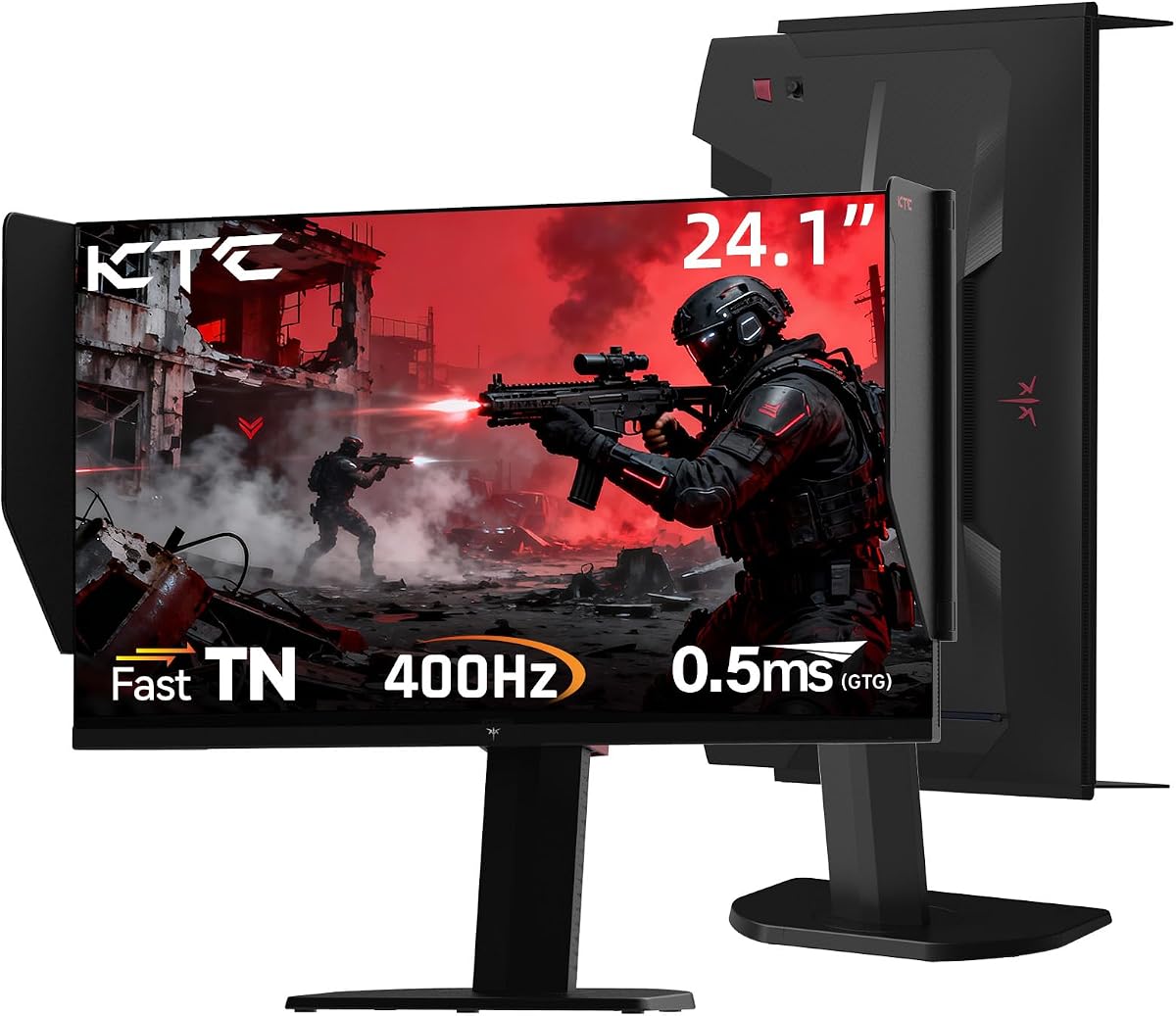
The KTC 25M1 boasts an industry-leading 400Hz refresh rate designed for the fastest esports titles. Rated 4.3 stars, it prioritizes motion clarity above all else with a 0.5ms response time.
We may earn a commission when you buy through this link, at no additional cost to you.
A unique shielding hood helps eliminate frame reflections and enhance visual immersion. Connectivity includes DisplayPort 1.4 and HDMI 2.0 with an external controller for quick mode switching.
TN panels generally offer narrower viewing angles and lower color accuracy than IPS or OLED options. This trade-off is acceptable only for players focused solely on competitive advantage.
This monitor targets professional players requiring every millisecond advantage. Its extreme speed and protective hood make it a specialized tool for tournament-grade performance.
The 400Hz refresh rate delivers buttery smooth motion essential for tracking targets in high-speed competitive environments.
Flocking material on the inner bezel absorbs light eliminating frame reflections and improving contrast visibility.
We may earn a commission when you buy through this link, at no additional cost to you.
The LG 27GX704A-B features dual HDMI 2.1 ports ideal for next-gen console compatibility. Rated 4.5 stars, it offers a glossy OLED display with a 240Hz refresh rate and 0.03ms response time.
We may earn a commission when you buy through this link, at no additional cost to you.
Its brightness peaks at 1300 nits ensuring visibility even in bright environments. UL certifications for Anti-Glare Flicker-Free and Low Blue Light support visual comfort during long sessions.
The glossy finish increases reflections compared to matte options. OLED technology inherently carries burn-in risks requiring careful usage habits over time.
This monitor suits gamers with consoles and PCs needing versatile connectivity. Its combination of high brightness, speed, and port selection makes it a future-proof investment.
Built for next-gen consoles or PC with dual HDMI 2.1 and DisplayPort 1.4 ensuring flexible connection options.
Three UL certifications help reduce distractions keep your view crisp and maintain visual comfort.
We may earn a commission when you buy through this link, at no additional cost to you.
The AOC Q27GAZD brings QD OLED technology to a competitive price point. Rated 4.4 stars, it delivers vibrant visuals with a 240Hz refresh rate and 0.03ms response time.
We may earn a commission when you buy through this link, at no additional cost to you.
HDR400 True Black certification enhances contrast while the quantum dot panel covers over 147% sRGB gamut. Adaptive-sync compatibility ensures seamless gaming across both AMD and NVIDIA GPUs.
The price remains high for mid-range shoppers despite competitive specs. This model prioritizes color performance over budget-friendly pricing options.
Ideal for gamers seeking OLED performance without flagship pricing. Its color accuracy and refresh rate provide a strong balance for competitive play and media consumption.
Quantum Dot OLED panel ensures rich colors with 147.6% sRGB and 110.2% DCI-P3 color gamut coverage.
HDR400 True Black certification provides deeper blacks and brighter highlights enhancing visual realism.
We may earn a commission when you buy through this link, at no additional cost to you.
The AOC Q27G41ZE delivers reliable performance through its overclocked IPS panel. Rated 4.6 stars, it features a 240Hz refresh rate and 0.3ms MPRT response time for smooth gameplay.
We may earn a commission when you buy through this link, at no additional cost to you.
Three-sided frameless design offers a modern aesthetic while Shadow Control helps brighten dark scenes. Adaptive-Sync eliminates tearing ensuring fluid performance across different graphics cards.
While IPS panels offer better viewing angles than OLED they lag behind in contrast and black levels. This trade-off suits users prioritizing durability over peak image quality.
This monitor is excellent for gamers wanting IPS reliability without compromising speed. Its robust build and gaming features provide a stable platform for competitive sessions.
Three-sided frameless design with textured black and red finish creates a modern immersive gaming aesthetic.
Shadow Control enhances image details in dark areas brightening scenes without over-exposing bright areas.
We may earn a commission when you buy through this link, at no additional cost to you.
The ASUS TUF Gaming VG27AQM5A combines speed with resolution through its 300Hz refresh rate. Rated 4.4 stars, it uses Fast IPS technology for sharp visuals with high frame rates.
We may earn a commission when you buy through this link, at no additional cost to you.
ELMB Sync technology eliminates ghosting while allowing variable refresh rate simultaneously. Integrated speakers provide convenient audio output and it features 95% DCI-P3 color gamut.
Its brightness and response times are average compared to OLED options. The price point reflects its balance between speed and traditional LCD reliability.
This monitor suits players needing high refresh rates on a budget. Its comprehensive feature set ensures strong performance for both gaming and content creation.
Extreme Low Motion Blur Sync enables ELMB together with variable refresh rate eliminating ghosting and tearing.
Features 95% DCI-P3 color gamut to deliver vibrant and accurate colors for enhanced visual experience.
We may earn a commission when you buy through this link, at no additional cost to you.
Selecting the right monitor involves balancing speed resolution and panel technology to match your competitive needs and budget constraints.
Refresh rate determines how many frames per second your monitor displays and higher rates reduce motion blur for clearer visuals during fast movement. Aim for at least 144Hz but consider 240Hz or higher for competitive advantages.
Prioritize 240Hz or more if your system can sustain high frame rates consistently.
Response time measures how quickly pixels change color and lower values reduce ghosting that can obscure enemy movement. Look for 1ms or lower with 0.5ms being ideal for precise aiming.
Ensure advertised times are gray-to-gray metrics rather than marketing claims for accurate performance.
Panel types like IPS OLED and TN each offer unique trade-offs between color accuracy contrast and speed. IPS provides balanced performance while OLED delivers superior blacks but costs more.
Choose IPS for balanced value or OLED if budget allows for premium image fidelity.
Resolution affects image clarity and field of view with 1080p offering higher frame rates and 1440p providing sharper details. Match resolution to your graphics card capabilities for optimal performance.
Select 1080p for maximum speed or 1440p if your GPU handles higher demands efficiently.
Adaptive Sync technologies like G-SYNC and FreeSync prevent screen tearing by synchronizing refresh rates with your graphics output. This ensures smoother visuals without stuttering during complex scenes.
Confirm compatibility with your GPU to enable tear-free gameplay seamlessly.
Ergonomic features such as height adjustment tilt and swivel reduce neck strain during extended sessions. Adjustable stands contribute to posture health and optimal viewing angles.
Opt for monitors with full adjustability to maintain comfort during long matches.
Modern connectivity options like HDMI 2.1 and DisplayPort ensure bandwidth for high refresh rates and resolutions. Having multiple ports allows flexible setups with PCs and peripherals.
Check for DisplayPort 1.4 or HDMI 2.1 to support your desired resolution and speed.
Budget considerations should reflect your performance priorities and existing hardware capabilities. Entry-level models offer speed while premium ones deliver image quality and advanced features.
Set a clear budget limit and prioritize speed over aesthetics for competitive play.
Position the monitor at eye level and arm's length to minimize eye strain and ensure clear visibility of all game details during sessions.
Adjust display settings like brightness and contrast based on room lighting conditions to optimize visibility without causing glare or excessive strain on eyes.
Regularly clean the screen with a microfiber cloth and avoid harsh chemicals to maintain clarity and prevent scratches over extended usage periods.
The ideal refresh rate for competitive Valorant is 240Hz or higher, as it provides smoother motion and faster updates. However, 144Hz remains a strong standard that balances performance with system requirements. The refresh rate should be paired with a system that can consistently deliver matching frame rates.
1080p is better for achieving higher frame rates and maximizing refresh rate potential on weaker hardware. 1440p offers sharper visuals and more screen space but demands more GPU power. Choose based on your PC's ability to handle resolution demands.
OLED panels can experience burn-in over time due to static elements like the game HUD. Modern monitors include features like pixel shifting and automatic shutdowns to mitigate this risk. Following manufacturer recommendations helps ensure long-term durability.
TN panels offer the fastest response times and lowest input lag but suffer from poor color accuracy and viewing angles. They remain viable if speed is the absolute priority and other visuals are secondary. Most competitive players prefer modern IPS or OLED for balanced performance.
Response time is crucial for reducing ghosting that can blur enemy movement. Aim for 1ms or less gray-to-gray response time for the clearest visuals. However, prioritize consistent frame pacing over marketing claims of ultra-low response.
An adjustable stand helps maintain proper viewing angles and reduces fatigue during long sessions. While not mandatory, it improves comfort and can prevent neck pain from improper monitor height. VESA mounts are useful if you want to use an alternative monitor arm.
A 24 to 27-inch monitor provides an optimal balance of detail and field of view for Valorant. Larger screens can increase visual clutter while smaller ones may limit situational awareness. Most competitive players favor 24 to 25 inches for focused gameplay.
G-SYNC and FreeSync both prevent screen tearing, with G-SYNC typically offering better compatibility with NVIDIA GPUs. FreeSync Premium supports more affordable options and works well on AMD systems. Choose based on your graphics card manufacturer for best results.
Selecting the right monitor involves balancing speed resolution and panel technology to match your competitive needs and budget constraints.
Prioritize speed and response time when evaluating options to ensure you gain an advantage during critical moments in matches.
Always verify current availability and features as display technology evolves quickly and may change the value proposition of each model.