
Skybasic Wireless Digital Microscope
4.2Editor score
Wireless WiFi connectivity
1080P HD resolution
Portable handheld design
Discover the top microscopes for soil microbes. This guide compares magnification, illumination, and accessories to help you observe bacteria, fungi, and soil
Exploring the microscopic world of soil requires a reliable microscope capable of resolving tiny organisms. A good model offers sufficient magnification and clear optics to view bacteria, fungi, and nematodes effectively.
We compared ten top-rated microscopes based on optical quality, illumination systems, and included accessories. Our analysis focuses on tools that support detailed soil science education and amateur research projects.
Each pick highlights specific strengths for observing soil samples. Prices and availability may change, so verify current details before purchasing. This guide helps you choose the right tool for your needs.
4.2Editor score

4.3Editor score

4.6Editor score
This table compares key specifications across all ten selected microscopes. Use it to find the right magnification and features for your soil observation needs.
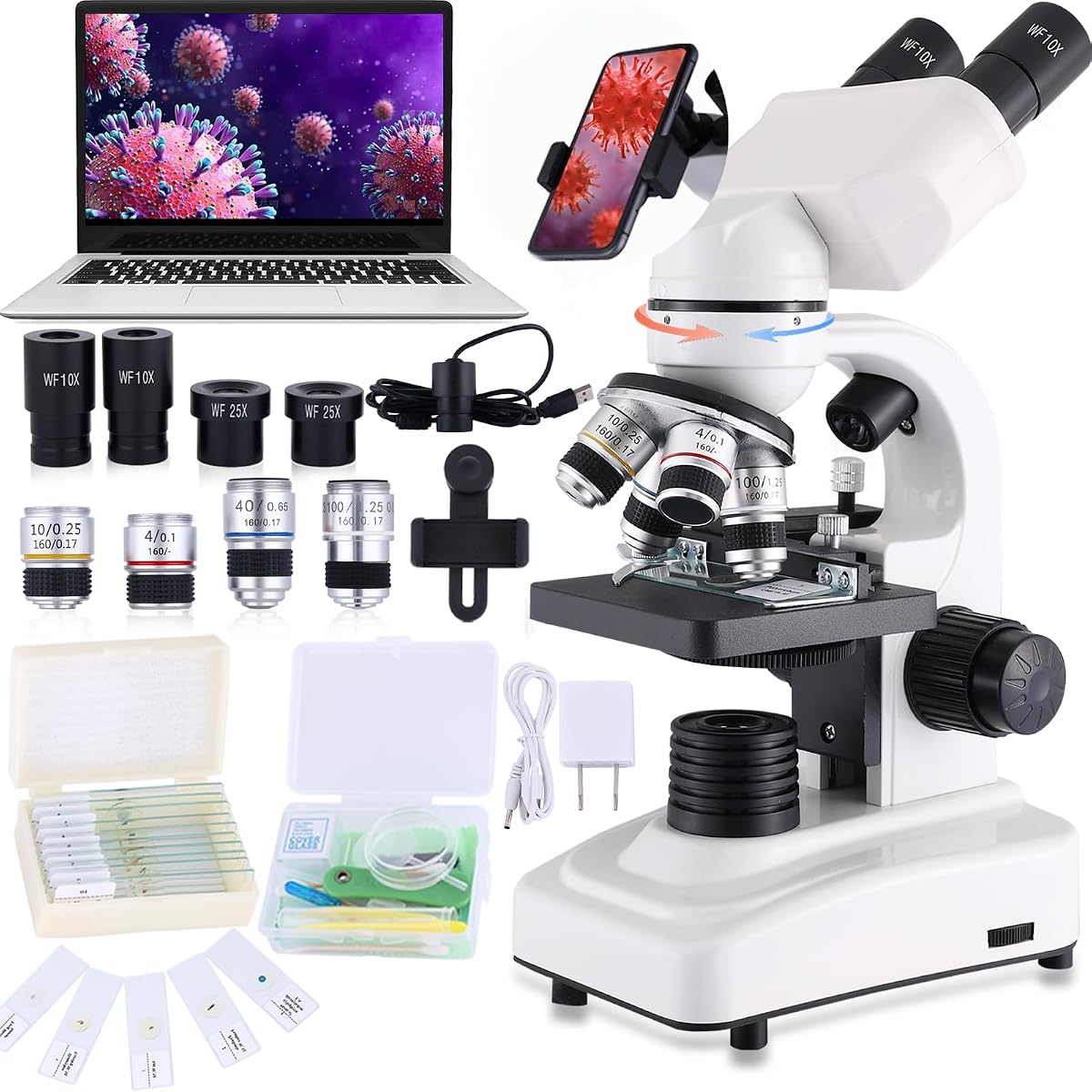


This PalliPartners microscope offers a balanced setup for soil microbe observation. With a 4.3 rating, it provides clear views of fungi and bacteria when samples are prepared correctly. The high power optics stand out for this price point.
We may earn a commission when you buy through this link, at no additional cost to you.
It features 100X to 2000X magnification using a WF25X eyepiece and multiple objectives. The dual LED system helps illuminate both opaque soil particles and translucent cells. The kit includes 28 slides, making it ready for immediate field or lab work.
While the build is sturdy, some users note the focus knobs require firm pressure. The plastic components are not as heavy as professional lab models, but they are sufficient for educational and hobbyist soil studies without breaking the bank.
This model is ideal for students and hobbyists starting soil science projects. It bridges the gap between toy scopes and expensive lab equipment. For consistent soil microbe imaging, it delivers strong value and performance.
The top and bottom LED lights allow you to view both opaque soil particles and transparent biological cells effectively.
Included slides and tools mean you can start observing soil samples right away without buying extra accessories.
We may earn a commission when you buy through this link, at no additional cost to you.
This compound microscope delivers a 4.4 rating and a wide-angle binocular experience. It is excellent for users who need to view larger soil samples or multiple organisms at once. The imaging clarity is sharp for extended periods.
We may earn a commission when you buy through this link, at no additional cost to you.
The 40X to 2500X range is supported by a dual LED lighting system and a mechanical stage. The wide-angle eyepieces reduce eye strain during long observation sessions. This makes it suitable for detailed soil analysis.
While it offers high magnification, the size is larger than desktop models. The setup takes a bit more time due to the mechanical stage. However, the comfort and clarity justify the effort for serious observers.
Buy this if you want a comfortable viewing experience for soil microbe research. The wide field helps track movement and spatial relationships in samples. It is a strong choice for hobbyists wanting better ergonomics.
The ultra-wide-angle eyepieces provide a larger field of view and reduce eye fatigue during long observation sessions.
The two-layer mechanical stage allows precise movement of slides to track soil organisms across the sample.
We may earn a commission when you buy through this link, at no additional cost to you.
This binocular microscope is designed for education and basic research with a 4.2 rating. It offers a complete set with tools for dissecting and preparing soil samples. The optics provide clear details for soil microbe analysis.
We may earn a commission when you buy through this link, at no additional cost to you.
With 100X to 2000X magnification and dual LEDs, it handles various specimen types well. The kit includes dissecting tools and a collection set. This makes it a comprehensive choice for students and home labs.
Some users find the focus knobs less secure than professional models. The binocular head adds weight compared to monocular versions. Despite these issues, it provides excellent value for educational soil science projects.
Choose this for schools or families exploring soil biology. The included tools allow for a complete experience from preparation to observation. It is a practical option for those needing more than just viewing.
The set includes dissecting tools and bottles for collecting and preparing soil samples for detailed study.
SGS certified non-toxic materials ensure safety for younger users exploring biology and soil science.
We may earn a commission when you buy through this link, at no additional cost to you.
This trinocular microscope boasts a 4.2 rating and laboratory-grade optics suitable for advanced soil research. The HD USB camera allows you to capture images and share them easily. It is built for high power observation.
We may earn a commission when you buy through this link, at no additional cost to you.
The 40X to 5000X range uses achromatic lenses to reduce color distortion. The electronic eyepiece and wide-angle design provide clear viewing. A large gift pack includes slides, tools, and accessories for immediate use.
The high magnification is impressive but may require oil immersion for the highest power. Software setup for the camera can be tricky for some users. Still, it offers professional features for home labs.
Select this for detailed soil microbe documentation. The camera enables recording observations for later analysis. It is best for those needing professional features without lab costs.
The HD USB camera allows you to capture and save images of soil organisms for sharing and analysis.
Adjustable refractive index and wide-angle eyepieces ensure comfortable viewing for different users.
We may earn a commission when you buy through this link, at no additional cost to you.
This trinocular microscope features a 4.2 rating and a stable double-layer stage. The trinocular head allows simultaneous viewing and camera connection. It is a versatile tool for soil research and teaching.
We may earn a commission when you buy through this link, at no additional cost to you.
With 40X to 2000X magnification and dual LEDs, it offers clear images. The coarse and fine focus knobs ensure sharp adjustments. It supports multiple users and scenarios from home to lab.
The trinocular design adds cost and weight compared to binoculars. Some may find the price higher than necessary for casual use. However, the flexibility for collaboration makes it a strong option.
Ideal for labs or teachers needing to share views. The stability and lighting support consistent soil sample observation. It is best for users who need to document or teach with shared visuals.
The double-layer stage securely holds slides to prevent shifts during detailed soil sample observations.
The trinocular head allows you to view and capture images simultaneously for better documentation.
We may earn a commission when you buy through this link, at no additional cost to you.
This trinocular model has a 4.4 rating and professional features like a digital eyepiece and 8 core design. It supports a wide range of applications from education to clinical testing. The optics are highly resolved.
We may earn a commission when you buy through this link, at no additional cost to you.
The 40X to 5000X range uses a genuine 185 achromatic lens. Adjustable features ensure comfort for different users. The lab gift set provides all necessary tools for immediate soil sample analysis.
The complexity of settings may be challenging for beginners. The price is high for home users. However, the clarity and range make it a top choice for serious research.
Buy this for professional-quality soil microbe observation. The high resolution and camera support are excellent for documentation. It is best for those needing advanced optical performance.
The genuine 185 achromatic lens improves resolution and clarity by eliminating light distortion.
Adjustable interpupillary distance and refractive index ensure comfort for a wide range of users.
We may earn a commission when you buy through this link, at no additional cost to you.
This handheld microscope offers a 4.2 rating and unmatched portability for fieldwork. It connects via WiFi to smartphones for easy viewing. The price makes it an accessible option for casual soil observation.
We may earn a commission when you buy through this link, at no additional cost to you.
With 50X to 1000X magnification and 8 adjustable LEDs, it provides decent detail. It works with Windows, Mac, Android, and iOS. The lightweight design allows you to take it to soil collection sites easily.
The fixed focus range limits depth of field control. It may not match high-end compound scopes for tiny bacteria. However, it is excellent for larger soil organisms like nematodes and fungi.
Choose this for outdoor exploration and quick soil checks. The connectivity allows instant sharing of finds. It is best for those prioritizing convenience over high power magnification.
WiFi allows direct connection to mobile devices for instant viewing and image capture without wires.
Lightweight and small size make it ideal for taking soil samples directly to the microscope anywhere.
We may earn a commission when you buy through this link, at no additional cost to you.
This microscope has a 3.7 rating and focuses on education with a color filter disc. It helps enhance contrast for different specimen types. The price is low for home or classroom use.
We may earn a commission when you buy through this link, at no additional cost to you.
The 40X to 2000X range includes a 5-color disc for viewing detail. Dual LEDs and a phone adapter make it functional. The accessory kit supports immediate start without extra purchases.
The lower rating suggests some reliability concerns. Optics are basic compared to higher-end models. It is best for entry-level users needing budget-friendly tools for soil science.
Select this for basic teaching needs. The color filter is a unique feature for contrast. It is a reasonable choice for those on a strict budget.
The 5-color disc diaphragm improves contrast for better viewing of different soil structures.
Includes slides, clips, and tweezers for immediate use in educational settings.
We may earn a commission when you buy through this link, at no additional cost to you.
This microscope has a 4.6 rating and offers the highest magnification on the list. It is built for research grade work with a mechanical stage. The optics deliver sharp images for tiny soil bacteria.
We may earn a commission when you buy through this link, at no additional cost to you.
With 40X to 5000X and a 1.3MP USB camera, it supports detailed imaging. The bright field design and variable diaphragm control light effectively. It is robust for clinical or breeding trials.
The complexity and cost may be excessive for casual users. Setup takes time to achieve the best image. But for serious soil microbe study, it is unmatched.
Ideal for professionals and advanced hobbyists. The mechanical stage allows precise tracking of soil samples. It is best for those needing professional quality imaging.
The double-layer mechanical stage ensures stable movement for tracking tiny soil organisms across the slide.
The 5000X range and high NA optics reveal details invisible to lower power scopes.
We may earn a commission when you buy through this link, at no additional cost to you.
This binocular model has a 4.1 rating and offers a standard setup for adults. The coaxial focus makes adjustments quick. It supports USB imaging for documentation of soil samples.
We may earn a commission when you buy through this link, at no additional cost to you.
With 40X to 2000X and dual lights, it covers general needs. The USB electronic eyepiece allows sharing images. It is designed for biology and science experiments.
The weight and average build quality are typical for this price. It is a solid tool for general study. However, it lacks the advanced features of trinoculars.
Choose this for straightforward viewing and sharing. It balances cost and function well. Best for those needing a reliable standard binocular for soil studies.
The coaxial knobs allow for quick and precise adjustments to keep soil samples in focus.
The USB capability lets you capture images on your PC for later analysis or sharing.
We may earn a commission when you buy through this link, at no additional cost to you.
Selecting the right microscope depends on your observation needs and budget. Here are key factors to consider for soil microbe work.
For soil microbe observation, a magnification range of 100X to 2000X is ideal. This covers bacteria, fungi, and nematodes. Higher magnification like 5000X is useful for finer details but requires precise preparation.
Look for scopes offering up to 2000X for general use. Higher ranges are optional for advanced study.
Dual LED lighting with top and bottom options helps view both opaque soil particles and transparent cells. Brightness control ensures comfort during long sessions. Proper lighting is critical for clear imaging.
Choose a model with adjustable dual LEDs to handle different sample types effectively.
A mechanical stage allows precise movement of slides to track organisms. Coaxial focus knobs provide quick coarse and fine adjustments. Stability is key to avoid sample drift during observation.
Prioritize a stable stage and coaxial knobs for smooth operation.
Binocular scopes are comfortable for viewing. Trinocular models add a camera port for digital capture. Decide if you need to record or share images regularly.
Trinocular is best for documentation; binocular is sufficient for visual study.
Achromatic objectives reduce color distortion for clearer images. High-quality glass optics ensure sharp details. Look for lenses with coatings to reduce glare.
Choose models with achromatic objectives for better clarity.
If you collect samples outdoors, a digital or handheld microscope offers portability. Desktop models are heavier but provide higher power. Consider your location and workflow.
Use portable options for fieldwork and desktop for lab analysis.
Kits with slides, tools, and cameras save extra purchases. Essential accessories include tweezers, coverslips, and prepared slides. A full kit speeds up your start.
Select a kit with necessary accessories to simplify setup.
Prices range from budget to professional. Entry-level models suit schools and beginners. Professional options offer better optics and durability. Balance features with cost.
Pick a model that fits your budget while meeting core needs.
Collect soil samples in sterile containers and prepare wet mounts on slides. Use tweezers to place thin layers of soil. Add a drop of water and cover with a slip.
Start with the lowest magnification to locate the sample. Adjust the dual LEDs for brightness. Focus using the coarse knob first then fine for clarity.
Clean lenses with a microfiber cloth after each use. Store in a dry place to prevent moisture damage. Regular calibration ensures consistent performance.
For bacteria, you generally need at least 1000X to 2000X magnification. Higher ranges allow clearer views of shape and structure. Ensure your lens and light support this.
Yes, digital microscopes work well for field observation. They are portable and connect to phones. However, they offer lower magnification compared to compound lab scopes.
A mechanical stage helps track moving organisms precisely. It is beneficial for detailed analysis. For basic viewing, a standard stage may suffice.
Mix a small amount of soil with water. Place a drop on a slide and cover with a slip. Ensure the sample is thin to avoid blocking light.
If you need to capture and share images, a trinocular model is valuable. For just viewing, a binocular is cheaper. Consider your documentation needs.
Look for SGS certified non-toxic materials especially for kids. Ensure electrical safety and stability to prevent tipping. Proper safety is crucial in labs.
The top picks cover a range of needs from budget to premium. The PalliPartners compound offers balance while the trinocular models provide advanced features.
Prioritize illumination and magnification for clear soil microbe views. Choose a model that fits your workflow and sample types.
Prices and stock change often so verify before buying. Use this guide to find the right microscope for your soil science projects.