
Fender Quantum HD 2 | 20×24 USB-C Audio Interface for Music Production
4.8Editor score
MAX-HD mic preamps
Fender Amp and FX Pack
32-bit/192 kHz converters
This guide compares the top external sound cards for guitar to help musicians find the right interface for recording, streaming, and studio production needs.
Finding the right external sound card for guitar is essential for musicians who want to capture their tone with clarity and precision. These devices bridge the gap between your instrument and your computer, ensuring that every note and nuance is recorded faithfully without noise or distortion.
We have evaluated ten leading audio interfaces and sound cards based on their input quality, software compatibility, portability, and overall performance. Our analysis focuses on models that excel in guitar recording while offering versatility for vocals and other instruments in various studio environments.
Each selection below highlights specific strengths such as preamp quality, conversion rates, and included software bundles. Keep in mind that product availability and pricing may change frequently, so always verify current details before making your final purchase decision.
4.8Editor score
4.6Editor score

4.2Editor score
The following table provides a side-by-side overview of key specifications and features across all ten selected products to help you quickly identify which model fits your specific recording requirements.


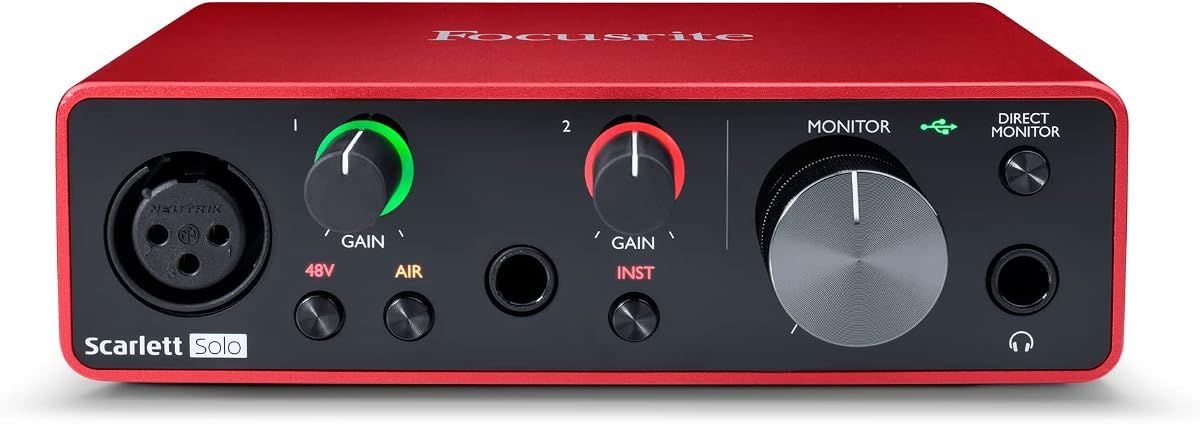
The Focusrite Scarlett Solo 3rd Gen stands out as a top choice for guitarists seeking professional recording quality without overwhelming complexity. With a strong user rating of 4.6 stars, this interface delivers reliable performance for both home studios and mobile setups. Its high-performance pre-amps and switchable Air mode ensure that your guitar tone remains crisp and articulate throughout the recording process.
We may earn a commission when you buy through this link, at no additional cost to you.
One of the most compelling features is the inclusion of Gain Halos, which provide visual feedback to prevent unwanted clipping or distortion during takes. The ability to record at up to 24-bit/192kHz means you retain every sonic quality of your performance. Additionally, the bundled software suite including Pro Tools Intro and Ableton Live Lite offers immediate creative tools for production and mixing without extra cost.
While it is a 2-channel interface which may limit expanding to large ensembles, for solo guitarists and vocalists the focus on quality over quantity makes sense. The three-year warranty adds peace of mind for long-term use and the low-noise outputs ensure monitoring remains transparent. This balance of professional features and user-friendly design makes it a standout option in its class.
Musicians looking for a dependable entry into professional audio recording will find this interface highly rewarding. It strikes an excellent balance between cost and capability ensuring your guitar tracks sound polished and ready for release. We recommend this model for anyone prioritizing tone clarity and reliability in their home studio workflow.
The switchable Air mode adds extra clarity to acoustic instruments and guitars allowing them to cut through the mix naturally.
Included DAWs and effects tools provide a complete starting toolkit for producers and musicians right out of the box.
We may earn a commission when you buy through this link, at no additional cost to you.
The Fender Quantum HD 2 is a powerhouse interface designed for serious musicians and producers who demand studio-grade fidelity. Its 20×24 USB-C configuration and MAX-HD preamps ensure that both vocals and instruments are captured with incredible detail. The 32-bit/192 kHz converters guarantee professional clarity that stands up to critical listening and mastering requirements.
We may earn a commission when you buy through this link, at no additional cost to you.
What sets this interface apart is the integration with the Fender Studio app which unlocks a full collection of authentic Fender amp models and effects. This allows guitarists to craft inspiring tones directly within their recording environment. Features like Auto Gain and dual re-amp outputs streamline the workflow for experimentation and live monitoring making it a versatile tool for creative production.
Although it comes with a higher price tag than entry-level options the feature set justifies the investment for those building a permanent studio. The inclusion of a perpetual license for Fender Studio Pro adds significant value for recording and mastering tasks. However, its advanced routing and controls may overwhelm users who prefer simple plug-and-play setups.
For professionals and enthusiasts ready to elevate their production capabilities this interface offers unmatched quality and tonal shaping. It bridges the gap between hardware recording and software emulation seamlessly. We recommend it for musicians who want the best sound quality and access to iconic amp tones without relying on third-party plugins.
Access authentic Fender amp models and effects through the Fender Studio app for realistic guitar and bass tones.
ADAT expansion and S/PDIF I/O provide sixteen digital inputs allowing your studio setup to expand as needs grow.
We may earn a commission when you buy through this link, at no additional cost to you.
The MAONO PS22 Lite delivers exceptional value by offering high-resolution recording capabilities in a compact and affordable package. With 24-bit/192kHz resolution and a dynamic range of 106dB, it ensures that your guitar and vocal tracks sound clear and realistic. This interface is ideal for streamers and content creators who need professional audio without breaking the bank.
We may earn a commission when you buy through this link, at no additional cost to you.
Its dedicated instrument input and impedance adjustment allow for quick guitar and vocal effects setup. The included ProStudio Routing Software provides virtual channels and loopbacks which are essential for live streaming and podcasting. Compatible with major DAWs like Pro Tools and Ableton Live, it fits easily into existing workflows for both beginners and experienced users.
While the build quality is lightweight compared to metal chassis units, it remains durable enough for regular transport and studio use. The dynamic light ring offers visual feedback on input status which enhances usability during recording. However, users new to routing software may need time to explore all the features before mastering them.
This interface is perfect for those starting their recording journey who need reliable performance and modern connectivity. It balances cost and functionality effectively making it accessible to a wide range of musicians. We recommend it for anyone seeking a versatile tool for recording and streaming at an affordable price point.
ProStudio Routing Software includes virtual channels and loopbacks tailored for live-streamers and social media influencers.
Plays well with Mac, Windows, and iPads ensuring you can record on various devices with plug-and-play ease.
We may earn a commission when you buy through this link, at no additional cost to you.
The Fender AudioBox GO is designed for musicians who need a portable yet capable interface for on-the-go recording. Its ultra-compact 2×2 USB-C form factor fits easily into a gig bag making it perfect for live sessions or travel. The pristine 24-bit/96 kHz converters ensure that your recordings maintain high quality whether you are at home or on the road.
We may earn a commission when you buy through this link, at no additional cost to you.
Access to the Fender Studio app unlocks a collection of authentic amp models and effects allowing you to craft inspiring tones quickly. The dedicated TS instrument input is optimized specifically for guitar and bass ensuring transparent signal capture. Zero-latency headphone monitoring with mix control lets you track in real-time without delay or distraction.
One limitation is the six-month trial for Fender Studio Pro which may require an upgrade for full production features. Additionally it lacks ADAT expansion which limits future scaling compared to larger interfaces. Despite this, its bus-powered design means no extra power supply is needed for simple plug-and-play operation.
This interface suits mobile musicians and podcasters who prioritize convenience and tonal flexibility. It provides a streamlined experience for creating studio quality recordings without complex setups. We recommend it for those valuing portability and immediate access to Fender tone modeling.
Bus-powered design ensures effortless portability and simple operation for mobile recording sessions anywhere.
Unlock complete Fender Amp and FX packs to craft inspiring guitar and bass tones directly in your workflow.
We may earn a commission when you buy through this link, at no additional cost to you.
The M-AUDIO M-Track Duo is a versatile USB sound card that covers podcasting, recording, and live streaming with ease. Its transparent Crystal Preamps guarantee optimal sound from microphones including condenser types ensuring clear vocal and instrument tracks. With 48kHz audio resolution this interface delivers pristine recording quality for professional results.
We may earn a commission when you buy through this link, at no additional cost to you.
The USB/Direct switch enables zero latency monitoring which is crucial for performers who need to hear themselves while recording. Stereo outputs and a headphone jack offer total monitoring flexibility for different studio environments. Included MPC Beats software provides essential production tools to help you start creating music immediately after setup.
While it does not support higher sample rates like 192kHz the 48kHz resolution is sufficient for most standard music production needs. The software included is functional but may not appeal to users seeking advanced DAW features. However, its ease of use and clear signal path make it a solid choice for hobbyists and professionals alike.
This interface is recommended for anyone needing a dependable audio solution for home studios or streaming setups. It balances functionality with affordability making it accessible for a wide audience. We suggest it for musicians prioritizing straightforward monitoring and reliable preamp performance.
USB/Direct switch allows zero latency monitoring so you can perform without hearing delays in your headphones.
MPC Beats Software included provides essential tools to start creating music right away without extra purchases.
We may earn a commission when you buy through this link, at no additional cost to you.
The Sound Blaster Play! 3 is a straightforward USB audio adapter designed to enhance headphone connectivity and audio playback. With 24-bit 96kHz support it delivers crisp sound for gaming or general music listening without requiring drivers. Its easy headphone compatibility allows connecting various analog headsets without additional adapters.
We may earn a commission when you buy through this link, at no additional cost to you.
The downloadable software provides audio enhancements and optimized profiles for multiple earphone brands giving you control over sound quality. It works straight out of the box which is ideal for users who want immediate functionality without configuration. This simplicity makes it a practical solution for basic audio needs.
For guitar recording it lacks dedicated instrument inputs and advanced features found in interfaces designed for music production. It is better suited for monitoring or playback rather than capturing live instrument signals. However, its low cost and portability make it a good backup for general audio tasks.
This adapter works well for users needing a simple audio boost on systems with poor onboard sound. It is not intended for professional music creation but serves basic tasks efficiently. We recommend it for casual listening or general computer audio upgrades.
Downloadable software provides powerful audio enhancements and optimized profiles for various earphone brands.
We may earn a commission when you buy through this link, at no additional cost to you.
The StarTech 7.1 USB Audio Adapter adds up to seven point one channels of audio to desktop or laptops via a single USB port. It supports 7.1 5.1 and 2 channel output using 3.5mm jacks which is useful for immersive sound experiences. The bus-powered design upgrades existing integrated audio without requiring additional power.
We may earn a commission when you buy through this link, at no additional cost to you.
It supports analog and digital audio output with sampling rates of 44.1KHz and 48KHz for playback and recording. SPDIF digital output and passthrough allow high-quality digital audio connection. Easy-to-use volume controls and mute buttons are built into the card for quick adjustments.
While effective for surround sound output it offers limited recording features compared to dedicated audio interfaces. The higher price point might be a drawback if you only need stereo audio. However, for users wanting surround sound capabilities on older systems this adapter is reliable.
This card is ideal for gamers and home theater enthusiasts needing multi-channel audio on older PCs. It simplifies setup with plug and play support in Windows systems. We recommend it for those prioritizing surround sound over professional recording.
Supports 7.1 5.1 and 2 channel output for immersive audio experiences in gaming and media.
We may earn a commission when you buy through this link, at no additional cost to you.
The Synido A10 delivers pristine 24-bit/48kHz resolution in a compact portable form factor designed for musicians and DJs. Its advanced dual-core chip ensures zero-latency monitoring making it suitable for recording guitars and electronic drums with accuracy. The wireless backing track feature allows streaming from one phone to another without cables for seamless performance.
We may earn a commission when you buy through this link, at no additional cost to you.
Designed with a durable aluminum alloy body the interface is built to withstand regular travel. Secure buckle-design USB-C connector prevents accidental disconnections during critical sessions. Independent volume buttons let you balance input signals and headphone monitoring precisely enhancing control over your mix.
Continuous power support via USB-C allows you to record while charging your phone or tablet ensuring uninterrupted sessions. However the lack of phantom power limits use with condenser microphones. The portable design favors mobility over extensive connectivity options.
This interface is excellent for mobile performers needing reliable recording and monitoring features on the go. Its wireless playback capability is a unique addition for practice and composition. We recommend it for musicians valuing portability and modern connectivity.
Stream backing tracks directly from one phone to the recording phone without cables for focus on performance.
Continuous power support allows recording while charging so you never interrupt a session due to battery.
We may earn a commission when you buy through this link, at no additional cost to you.
The Cubilux CB5 USB Audio Interface converts your laptop port into multiple audio connections for versatile setup. With 5-In-1 capabilities it supports stereo microphone jacks line-in and line-out for microphones instruments and headphones. The built-in advanced chip captures crisp sound up to 96 KHz/24-bit ensuring professional quality.
We may earn a commission when you buy through this link, at no additional cost to you.
Its Hi-Res DAC fully drives studio monitors up to 250 Ohm delivering clean sound even at higher impedances. The ultra-low noise design is integrated with the DAC to ensure no loss of clarity. Independent device names make multi-track recording easy by assigning names to each interface channel.
The portable design means no external power source is needed which is convenient for on-the-go recording. However note that line-out and audio output jacks cannot be used simultaneously which may limit some setups. The small form factor makes it easy to carry anywhere inspiration strikes.
This interface is suitable for podcasters and musicians needing a versatile hub for various audio inputs. It balances functionality with portability effectively. We recommend it for users requiring flexible connectivity in a compact package.
Converts USB port into multiple jacks for microphones instruments and speakers as needed for setup.
Assign independent device names to each interface for easy multi-track audio recording and management.
We may earn a commission when you buy through this link, at no additional cost to you.
The Cubilux 7.1 USB Surround Sound Card immerses you in rich audio experiences with support for 7.1 and 5.1 surround. Headphone output supports sampling rates up to 384KHz allowing you to enjoy Hi-Res music from streaming services. Full aluminum alloy housing isolates electronic interference ensuring static-free transmission.
We may earn a commission when you buy through this link, at no additional cost to you.
It supports stereo headphone output line-in and mic input making it versatile for general audio tasks. The compact design does not require external power and works seamlessly with PCs and Macs lacking built-in surround cards. However, it does not support older Windows versions like XP or 7.
While designed for surround sound in gaming and movies it offers high sample rates for Hi-Res music playback. The aluminum case provides durability and better signal transmission compared to plastic alternatives. It is a solid choice for multimedia users wanting improved audio quality.
This card is ideal for users seeking surround capabilities and Hi-Res playback without complex setups. It is not a dedicated recording interface but suits playback needs well. We recommend it for media consumption and general audio enhancement.
Support sampling rates up to 384KHz for Hi-Res music on Spotify and Apple Music without loss.
Full Aluminum alloy case ensures full isolation of electronic interference and no-loss transmission.
We may earn a commission when you buy through this link, at no additional cost to you.
Selecting the right external sound card for guitar involves evaluating several technical and practical factors to ensure it meets your specific recording needs.
Look for interfaces with high-quality preamps and dedicated instrument inputs to capture guitar signals with clarity. High headroom prevents clipping when playing loudly or with high-gain pedals ensuring clean tones.
Prioritize interfaces offering dedicated TS or TRS inputs for instruments rather than line inputs that may introduce noise.
Higher sample rates like 96kHz or 192kHz provide more detail but require more storage and processing power. For most guitar recording 48kHz is sufficient while higher rates suit professional mastering.
Choose a card with at least 24-bit resolution to ensure dynamic range and reduce quantization noise in quiet passages.
USB-C connections offer faster data transfer and modern compatibility with laptops and mobile devices. Ensure the interface matches your computer's ports to avoid needing extra adapters.
Consider ADAT or S/PDIF ports if you plan to expand your studio with additional digital inputs in the future.
Zero-latency monitoring is critical for guitarists to hear themselves in real-time without digital delay. Hardware mix controls allow you to balance dry instrument signal with software effects.
Choose models with direct monitoring switches so you can hear your raw signal while recording comfortably.
Many interfaces bundle DAWs and amp modeling software that save money and jumpstart your production. Check which tools are included and if they fit your workflow style.
Ensure included software supports your operating system and offers enough features for your recording needs.
Bus-powered units do not need external adapters making them easier to transport for mobile recording. This is especially useful for on-the-go musicians or remote sessions.
Prioritize compact designs with secure connectors if you plan to move your gear frequently during sessions.
Entry-level models offer core functionality without the cost of premium features like surround or multi-channel options. Evaluate what is essential for your work before spending extra.
Balance price against performance ensuring you pay for features you will actually use in your daily workflow.
Durable construction protects your investment during travel and daily use. Aluminum or metal chassis often resist wear better than plastic alternatives.
Look for at least a one-year warranty but prefer brands offering three years for long-term security and reliability.
Connect your guitar directly to the dedicated instrument input on the interface using a standard 1/4 inch cable. Adjust the gain knob while playing to reach a healthy level indicated by LEDs without clipping signals.
Install any required drivers and configure your DAW to recognize the interface as your audio device. Set buffer size low for performance and higher for stability if you experience glitches.
Keep firmware updated through manufacturer tools to ensure compatibility with new software and operating systems. Store the interface in a dry place and avoid bending cables to maintain signal integrity over time.
The Focusrite Scarlett Solo 3rd Gen is highly recommended for home recording due to its reliable preamps and software bundle. It offers high-quality recording without requiring expensive studio setups.
Yes, a dedicated instrument input ensures proper impedance matching for passive pickups. Using line inputs can result in weak signal or increased noise.
For most use cases 48kHz is sufficient. Higher rates like 96kHz or 192kHz provide marginally better quality but require more disk space.
Many USB-C interfaces work with tablets and phones if supported by the OS. Check compatibility before buying to ensure mobile functionality.
Many modern interfaces offer plug-and-play on Mac and Windows but ASIO drivers may be needed for low latency on Windows systems.
Use direct monitoring features on the interface to hear your signal without delay. Lower buffer sizes in your DAW also help reduce software latency.
Bundled simulators save money and offer realistic tones. Many include popular amp models that work well for various genres.
Focus on good preamp quality and essential features. Avoid models with too many gimmicks that add cost without improving sound quality.
The Focusrite Scarlett Solo 3rd Gen, Fender Quantum HD 2, and MAONO PS22 Lite represent top choices across premium, pro, and budget categories. Each offers distinct strengths suited for different recording scenarios.
Prioritize input quality and monitoring features when making your decision to ensure a smooth recording workflow. Matching the interface to your studio size and performance needs will yield the best results.
Remember to check current availability and pricing before buying as deals and stock may change. Selecting the right tool today ensures better recordings tomorrow.