This guide compares the top 10 Arduino ADC Board options for precision analog sensing, featuring ADS1115 and ADS1256 modules with varied channel counts.
As an Amazon Associate we earn from qualifying purchases. We may earn a commission when you buy through links on this page, at no additional cost to you. Read our affiliate disclosure.As an Amazon Associate we earn from qualifying purchases.Purchases through our links may earn us a commission, at no extra cost to you. Read our affiliate disclosure.
An Arduino ADC Board expands the microcontroller capabilities by converting analog signals into digital data. These modules are essential for reading sensors like temperature probes, strain gauges, and audio inputs that require higher resolution than the built-in converters.
We evaluated ten highly rated modules based on resolution, channel count, communication protocols, and overall user feedback. Our analysis focuses on accuracy, ease of integration with popular boards like Raspberry Pi and ESP32, and reliability across different voltage ranges.
Each pick highlights specific strengths such as programmable gain, sampling rates, and build quality. Prices fluctuate based on market demand and bundle options, so verify current listings before purchasing to ensure you get the best value for your project needs.
Top 3 Picks for Best Arduino ADC Board
Best Budget
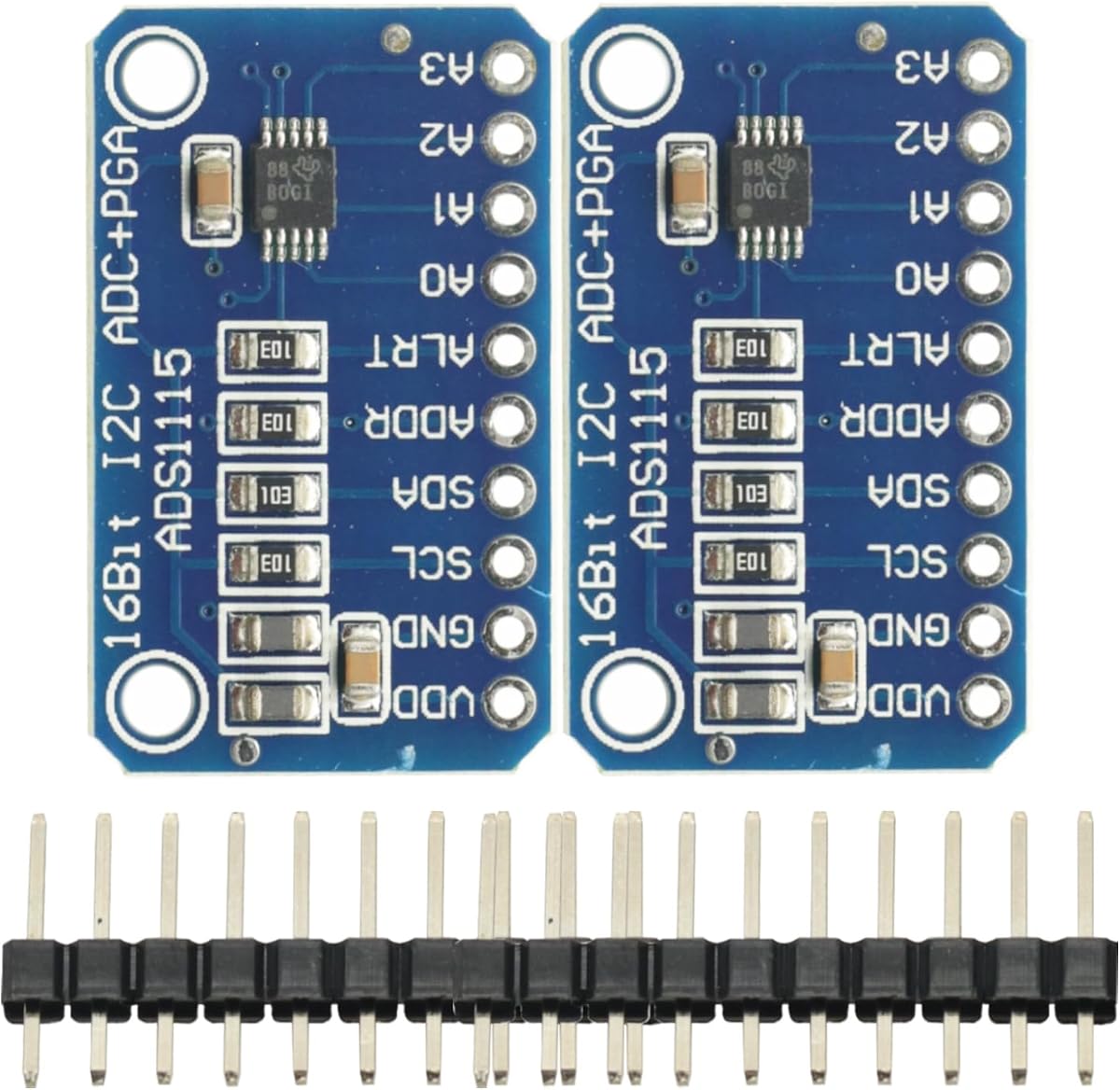
2Pcs ADS1115 16 Bit I2C Module Precision ADC 4 Channel Analog-to-Digital Converter Development Board Pro Gain Amplifier for Arduino Raspberry Pi ADC Module
The following table provides a side-by-side comparison of all ten selected ADC modules, highlighting key specifications such as resolution, channel count, communication interface, and supply voltage ranges to help you make an informed decision for your specific application.
Lonely Binary 3-Pack ADS1115 16-Bit ADC I2C Module for C++ & ESP32
16-bit resolution
2.0V to 5.5V supply
ENIG gold plating
4 selectable addresses
This Lonely Binary 3-Pack ADS1115 module stands out as the Editor's Choice due to its superior build quality and precision. Rated highly by users for its reliable performance with microcontrollers like ESP32 and Arduino, it delivers true 16-bit resolution across four single-ended or two differential channels.
Pros
Excellent build quality with gold plating
True 16-bit precision for sensitive sensors
Works with 3.3V and 5V systems
Great value for a pack of three
Wide community library support
Cons
Requires external level shifting for SPI
Limited to 4 modules on one bus
We may earn a commission when you buy through this link, at no additional cost to you.
The ENIG gold plating ensures excellent solderability and oxidation resistance, making it ideal for long-term projects. Its ability to handle both 3.3V and 5V logic without level shifters simplifies wiring. The software-selectable PGA input ranges allow resolution of voltage changes down to 7.8 microvolts per LSB.
While it is limited to four modules on a single I2C bus, the four selectable addresses allow up to 16 analog channels which is sufficient for most data loggers. The Australian-designed brand focuses on open-source compatibility, ensuring libraries exist for C++, MicroPython, and CircuitPython for rapid development.
This pack is perfect for educators and makers building multi-sensor monitoring nodes. The inclusion of three units offers spares for classroom labs or complex projects. If you need reliable, high-resolution ADC conversion with minimal hassle, this module is the top recommendation.
Superior Build Quality
The ENIG finish ensures durability and reliability over time, which is rare for standard hobbyist modules.
Wide Compatibility
Designed to work seamlessly with popular boards like UNO, Mega, Nano, ESP32, and Raspberry Pi without extra hardware.
2Pcs ADS1115 16 Bit I2C Module Precision ADC 4 Channel Analog-to-Digital Converter Development Board Pro Gain Amplifier for Arduino Raspberry Pi ADC Module
16-bit resolution
4 channels
I2C interface
7 programmable ranges
This 2Pcs ADS1115 module offers exceptional value for builders needing reliable ADC conversion on a tight budget. With a perfect 5.0 rating, it is praised for its ease of use with Arduino and Raspberry Pi. The four-channel design supports both single-ended and differential inputs effectively.
Pros
Extremely affordable price for two units
Perfect 5.0 rating from verified buyers
Wide voltage supply range support
Simple setup for Raspberry Pi projects
Programmable gain amplifier included
Cons
Basic packaging may lack protection
Documentation could be more detailed
We may earn a commission when you buy through this link, at no additional cost to you.
The programmable data rate allows customization from 8sps to 860sps depending on your speed requirements. Input voltage ranges from 2.0V to 5.5V, ensuring compatibility with various logic levels. The board includes a PGA to amplify small signals for better resolution in sensitive applications.
Although the packaging is basic, the module itself performs robustly for common sensor tasks like thermocouples or load cells. The I2C interface simplifies wiring by requiring only two communication pins. It is an ideal starter kit for those new to analog data acquisition.
For budget-conscious makers, this two-pack provides the necessary components for multiple projects. It is especially useful for Raspberry Pi users who lack analog pins. If cost is a primary concern without sacrificing core functionality, this module is the clear winner.
Cost Effective
Buying in a pack of two reduces the per-unit cost significantly, making it accessible for students and hobbyists.
Easy Integration
The standard I2C protocol and pre-soldered headers make it plug-and-play compatible with most microcontroller boards.
HiLetgo ADS1256 5V 8 Channel 24 Bit ADC Data Acquisition Board Module High Precision AD Collecting Data Acquisition Card
24-bit resolution
8 channels
SPI interface
On-board voltage reference
The HiLetgo ADS1256 is a premium module designed for applications requiring high precision and high resolution. It features TI ADS1256IDB ADC chips that deliver 24-bit resolution, allowing for extremely accurate measurements of analog signals. This makes it suitable for professional data acquisition tasks.
Pros
High precision TI ADS1256IDB chips
24-bit resolution for fine details
On-board datum voltage source included
Configurable inputs for flexibility
Low nonlinearity for accuracy
Cons
Requires more complex SPI wiring
Higher cost compared to 16-bit options
We may earn a commission when you buy through this link, at no additional cost to you.
With eight single-ended or four differential inputs, it offers versatile configuration options. The on-board ADR03 2.5V datum voltage source chip ensures stable measurements. The module supports data output rates up to 30ksps, balancing speed and accuracy effectively for many industrial uses.
The low nonlinearity of ±0.0010% ensures that the readings are reliable across the entire voltage range. However, it requires SPI communication which is more complex than I2C. The module measures within 3V so external conditioning may be needed for higher voltages.
For users needing 24-bit precision without external voltage references, this module is unmatched. It is perfect for weighing scales, precision sensors, and industrial monitoring. If high accuracy is critical for your project, the added complexity is well worth the investment.
High Resolution
24-bit resolution captures minute voltage changes that standard 10 or 12-bit microcontrollers miss entirely.
Stable Reference
An integrated voltage reference chip removes the need for external components, reducing component count and cost.
The Teyleten Robot ADS1115 comes in a pack of three, providing excellent value for projects needing multiple ADC channels. With a 4.7 rating, users appreciate its precision and reliability in converting analog signals. The 16-bit resolution is standard for this class of module.
Pros
Great value with three modules included
High user rating for performance
Wide supply voltage range
Internal PGA for amplification
Auto shut down power feature
Cons
Packaging quality varies
Limited documentation on advanced features
We may earn a commission when you buy through this link, at no additional cost to you.
The onboard PGA helps amplify signals for better resolution. Programmable data rates range from 8sps to 860sps. The wide supply voltage range from 2.0V to 5.5V ensures compatibility with 3.3V and 5V systems. Auto shut down mode helps save power in battery applications.
While it is a standard ADS1115 module, the three-pack allows you to expand your projects without buying separately. It is suitable for data loggers, sensor networks, and monitoring systems. The I2C interface keeps wiring simple and clean.
For makers needing multiple units, this pack is a smart choice. It balances cost and performance well. The auto shut down feature is a nice bonus for portable devices. If you need several reliable ADC modules, this option is highly recommended.
Value Pack
Purchasing three units at once reduces the total cost compared to buying single modules separately.
Power Efficiency
Auto shut down mode reduces power consumption when the ADC is not actively sampling data.
This HiLetgo 3pcs ADS1115 pack is a versatile choice for both Arduino and Raspberry Pi users. The high precision 16-bit converters provide stable readings for various sensors. It is especially noted as a good tool for Raspberry Pi projects lacking analog GPIO pins.
Pros
High precision ADS1115 16-bit chips
Great tool for Raspberry Pi
Wide voltage supply range
Comparator mode for accuracy
Auto shut down power saving
Cons
Some units may have soldering issues
Instructions could be clearer
We may earn a commission when you buy through this link, at no additional cost to you.
The module operates on a wide voltage supply range from 2.0V to 5.5V. Comparator mode helps maintain accuracy in threshold detection tasks. Auto shut down mode conserves power in standby states. The PGA allows sensitivity adjustments for different sensor types.
Users have reported occasional soldering issues, so inspecting the pins before use is recommended. Despite this, the performance is consistent for general use. The 16-byte I2C buffer helps manage data flow efficiently. It is a solid option for bulk purchases.
For students or makers building multiple projects, this 3-pack offers cost-effective reliability. The comparator mode is a unique feature for simple alarm circuits. If you need multiple modules with standard performance, this pack is a reliable choice.
Comparator Mode
Allows the module to trigger interrupts based on voltage thresholds, simplifying alarm or safety systems.
Raspberry Pi Support
Designed specifically to fill the gap where Raspberry Pi lacks built-in analog input capabilities.
4Pcs ADS1115 16 Bit 4 Channel I2C IIC Analog-to-Digital
16-bit resolution
4 channels
I2C interface
Internal oscillator
This 4Pcs ADS1115 pack provides the highest number of units in one buy, making it ideal for large scale sensor networks. The 16-bit ADCs offer reliable precision for reading analog sensors. Each module features an internal oscillator for consistent timing without external components.
Pros
Four modules in one package
Internal oscillator for timing
Comparator mode for thresholds
Supports differential inputs
Power efficient auto shut down
Cons
Lower overall rating than others
Quality control can vary
We may earn a commission when you buy through this link, at no additional cost to you.
The four differential input channels allow simultaneous sampling. Single-ended inputs are also supported for flexible configuration. Comparator mode helps in monitoring applications by triggering events. The auto shut down mode saves power between readings.
While the rating is slightly lower than other options, the price per unit is very competitive. Quality control may vary, so checking each module before installation is advised. It is suitable for classroom labs or industrial prototypes requiring many inputs.
For those needing a dozen analog channels quickly, four of these modules can provide 16 channels total. It simplifies the procurement process for bulk needs. If you need quantity and cost savings, this is the best value option available.
High Capacity
Four modules allow up to 16 channels when chained together on one I2C bus for expanded sensing.
Internal Timing
An internal oscillator ensures accurate sampling rates without requiring external crystal oscillators or timers.
2PCS ADS1115 16 Bit IIC I2C Analog to Digital Converter
16-bit resolution
4 channels
I2C interface
Programmable data rate
This 2PCS ADS1115 pack has a perfect 5.0 rating indicating high satisfaction among users. It provides two precision ADC modules for Arduino and Raspberry Pi projects. The I2C interface simplifies connections by using only two data lines for communication.
Pros
Perfect 5.0 rating
Two modules per pack
Standard I2C communication
Wide voltage support range
Seven input ranges available
Cons
Small footprint for testing
No headers included on some units
We may earn a commission when you buy through this link, at no additional cost to you.
Input voltage ranges from 2.0V to 5.5V to support various logic levels. There are seven programmable input ranges allowing flexibility for different sensor outputs. The programmable data rate adapts to speed needs from slow monitoring to fast sampling.
The modules are compact and ready for integration into breadboards. Some units may require headers to be soldered which is standard for these boards. The simplicity and reliability make it a favorite for quick prototyping.
If you need two reliable modules for a project pair, this pack delivers. The full voltage compatibility removes guesswork. It is a straightforward choice for hobbyists needing precision analog reading.
User Satisfaction
A 5.0 rating reflects consistent quality and performance across all units in the batch.
Flexible Input
Seven input ranges allow optimization for sensors ranging from millivolts to full scale voltage.
Teyleten Robot AD7606 Module Multi-Channel AD Data Acquisition
16-bit resolution
8 channels
SPI interface
200KHz sampling
The Teyleten Robot AD7606 module offers high-speed data acquisition with 8 independent channels. It supports a sampling frequency of 200KHz which is significantly faster than typical ADC modules. This makes it suitable for audio or vibration monitoring projects.
Pros
8 independent channels available
High 200KHz sampling rate
Parallel data output support
Internal 2.5V reference
Wide input voltage range
Cons
Lower user rating
Requires complex timing setup
We may earn a commission when you buy through this link, at no additional cost to you.
The module includes an internal 2.5V reference for stable conversions. Input voltage ranges from ±5V to ±10V covering industrial levels. It communicates via SPI with parallel data output options for high throughput. The 16-bit resolution ensures detail in fast signals.
However, the module requires complex timing and control signals. Users have reported a lower rating likely due to difficulty in setup. It is more advanced than standard I2C modules and requires specific microcontroller support.
For specialized applications needing simultaneous sampling, this module is unique. It bridges the gap between hobbyist and industrial ADCs. If you need speed and channel count, this is the advanced choice.
High Speed
200KHz sampling allows capture of fast changing signals that standard modules would miss or alias.
Parallel Output
Parallel data output enables high throughput data transfer when serial speed is insufficient.
This 4PCS ADS1115 pack is ideal for IoT development and monitoring systems. It provides high precision 16-bit conversion for stable sensor readings. The I2C interface simplifies wiring making it easy to integrate into existing systems.
Pros
High Precision 16-bit conversion
I2C interface for easy integration
Great compatibility with microcontrollers
4 input channels with gain
Ideal for sensor projects
Cons
Packaging could be sturdier
Instructions are generic
We may earn a commission when you buy through this link, at no additional cost to you.
Compatible with Arduino, Raspberry Pi, and ESP32, it supports a wide range of microcontrollers. The built-in PGA improves sensitivity for low voltage signals. Four channels allow reading multiple sensors simultaneously without extra hardware.
The modules are perfect for reading data from temperature, pressure, and light sensors. Users appreciate the balance of cost and performance. While packaging is basic, the modules perform reliably once installed.
For building a sensor network, four units provide 16 channels. It supports robotics and engineering experiments well. If you need a robust set of ADC modules, this pack is a strong choice.
IoT Ready
Compatible with IoT microcontrollers like ESP32 and ESP8266 for smart sensor networks.
Sensor Compatibility
Designed to read data from various common sensors used in electronics and robotics.
This HiLetgo ADS1115 is a solid standard option for basic ADC needs. It features high precision 16-bit conversion and is easy to use with standard libraries. It is a great tool for Raspberry Pi users needing analog inputs.
Pros
High precision ADS1115 16-bit chip
Easy to use I2C ADC
Wide voltage supply range
Good tool for Raspberry Pi
Comparator mode support
Cons
Basic design without extras
Requires separate header soldering
We may earn a commission when you buy through this link, at no additional cost to you.
The wide voltage supply range ensures compatibility with most boards. Comparator mode is helpful for accuracy in monitoring applications. The auto shut down mode conserves power effectively. It is a reliable workhorse for standard projects.
It is a basic board without extra features like onboard displays. However, it delivers the core functionality needed for data acquisition. The price is reasonable for a single unit.
For those needing a reliable single module without extra cost, this is a safe bet. It performs well for temperature, pressure, and voltage monitoring. If you want a proven and basic solution, this module is a good choice.
Reliability
A proven design that has been used in countless projects without failure.
Ease of Use
Straightforward integration with common libraries makes it friendly for beginners.
We may earn a commission when you buy through this link, at no additional cost to you.
Buying Guide – How to Choose the Best Arduino ADC Board
Selecting the right ADC board requires considering resolution, channels, and interface to match your project needs.
Resolution
Resolution determines how small a voltage change the board can detect. Higher bits mean finer detail. For standard sensors 16-bit is usually enough. For professional instruments 24-bit offers extreme precision.
Choose 16-bit for general sensing and 24-bit for high precision lab instruments.
Channel Count
Channel count defines how many sensors you can read at once. Single modules have 4 channels. 8 channel boards reduce the need for multiple boards. Check your total sensor count.
Ensure you have enough channels to handle all your sensors simultaneously without extra wiring.
Communication Interface
I2C is simple and uses fewer pins. SPI is faster but requires more wiring. Some boards support differential inputs for noise immunity. Choose based on your bus limits.
Use I2C for simplicity and SPI for high speed applications.
Input Range
Input range is the voltage the board accepts. Some work with 0 to 5V. Others accept negative voltages. Check if the board supports differential inputs.
Ensure the input range covers your signal without clipping or distortion.
Voltage Logic
Logic voltage must match your microcontroller. 3.3V boards work with ESP32. 5V boards work with AVR. Some support both. Check the level tolerance.
Select a board that matches your logic level to avoid damage.
Sampling Rate
Sampling rate determines how fast you can read data. Slow rates are fine for temperature. Fast rates are needed for audio. Check the max SPS of the chip.
Pick a rate that matches the speed of your sensor signals.
Programmable Gain
A programmable gain amplifier boosts small signals. This allows high resolution for tiny voltages. Look for a board with a built-in PGA. It simplifies the circuit.
Use PGA to amplify weak signals for better accuracy.
Build Quality
Build quality affects longevity. Gold plated pads resist oxidation. Good solder joints prevent failures. Check user feedback for reliability issues.
Invest in quality boards to ensure long term project stability.
How to Use and Care for Your Arduino ADC Board
Start by connecting the VCC and GND pins to your power supply. Then connect the SDA and SCL pins to the I2C bus on your microcontroller. Ensure the logic levels match to avoid communication errors.
Install the relevant library in your IDE. Use example code to test readings. Calibrate your sensors by comparing values with known standards. Adjust the gain settings for best results.
Keep the board away from moisture and extreme heat. Use heat shrink or tape to secure wires. Inspect connections regularly to ensure stability in long term projects.
Frequently Asked Questions
What is an Arduino ADC Board?
An Arduino ADC Board is an external module that converts analog signals to digital data. It allows microcontrollers to read analog sensors with higher precision. It connects via I2C or SPI to expand your input capabilities.
Why use an external ADC?
Microcontrollers like Arduino have limited precision. External ADCs offer 16 or 24 bits for finer detail. They allow reading more channels without using internal pins. They are essential for high accuracy projects.
What is the difference between ADS1115 and ADS1256?
The ADS1115 is 16-bit and uses I2C. The ADS1256 is 24-bit and uses SPI. ADS1256 has higher precision and speed. ADS1115 is simpler to wire and cheaper.
Can I connect multiple ADC boards?
Yes you can connect multiple ADC boards on the same I2C bus. Each board has a unique address. By setting different addresses you can chain up to four boards for 16 channels.
Do I need a level shifter?
Some boards are logic tolerant and work with 3.3V and 5V. Others may need a level shifter. Check the datasheet to see if the board supports your microcontroller voltage.
How do I read analog values?
Install the library for your specific ADC board. Initialize the device in setup. Read channels in loop. Convert raw values to voltage using the scale provided in the datasheet.
What sensors work best?
Temperature sensors thermocouples strain gauges and load cells work well. Any sensor producing a continuous analog voltage is compatible. Ensure the sensor voltage is within the ADC input range.
Final Thoughts on Choosing the Best Arduino ADC Board
The top picks for October 2026 offer a range of options from budget packs to high precision boards. The Lonely Binary 3-Pack is great for value and build quality. The ADS1256 offers premium resolution for advanced tasks.
Consider your project needs for resolution and channels before deciding. Balance ease of use with the performance you need. Ensure compatibility with your microcontroller logic levels to avoid extra components.
Prices change frequently so check current listings before buying. Always verify the latest user reviews to confirm quality. With the right board your analog sensing projects will be more precise and reliable.