
Acxico 3Pcs Mini Micro N20
4.6Editor score
Full metal gearbox design
3V to 6V operation
3mm D-type shaft output
This guide compares the top 10 DC Motors for Robots based on torque, speed, voltage, and build quality to help you choose the perfect motor for your DIY
Choosing the right motor is critical for any robotic build. DC motors offer simplicity, affordability, and ease of control for hobbyists and professionals alike.
We evaluated ten highly rated options based on torque output, voltage range, gear construction, and user feedback to ensure reliable performance across diverse applications.
Each pick below highlights key specs and ideal use cases. Prices and availability change frequently so verify details before purchasing to meet your project needs.
4.6Editor score

4.7Editor score

4.6Editor score
This side-by-side comparison highlights key specifications for all ten motors including voltage range, gear ratios, shaft dimensions, and ideal project types.



This upgraded TT motor stands out with an integrated hall encoder providing precise speed and position feedback essential for advanced robot control systems. It earns a 4.7 star rating for its robust metal construction and versatile performance across smart vehicle projects.
We may earn a commission when you buy through this link, at no additional cost to you.
The all-metal gearbox and shaft significantly improve durability compared to plastic alternatives while delivering a high 1.90 reduction ratio for increased torque output. The 12 PPR encoder enables real-time measurement of rotational speed which is critical for maintaining stability in dynamic environments.
While the encoder requires compatible microcontroller logic it offers a clear advantage for projects needing accurate navigation. The slight price increase is justified by the engineering quality and reduced need for external sensors.
Buyers building smart cars or educational robots requiring feedback loops will find this motor ideal. It balances performance features and ease of integration perfectly for serious hobbyists seeking reliability.
The integrated Hall encoder outputs quadrature signals allowing microcontrollers to track exact shaft position and speed without additional hardware.
Upgraded all-metal gears and shaft resist wear and tear ensuring longer service life under heavy load conditions.
We may earn a commission when you buy through this link, at no additional cost to you.
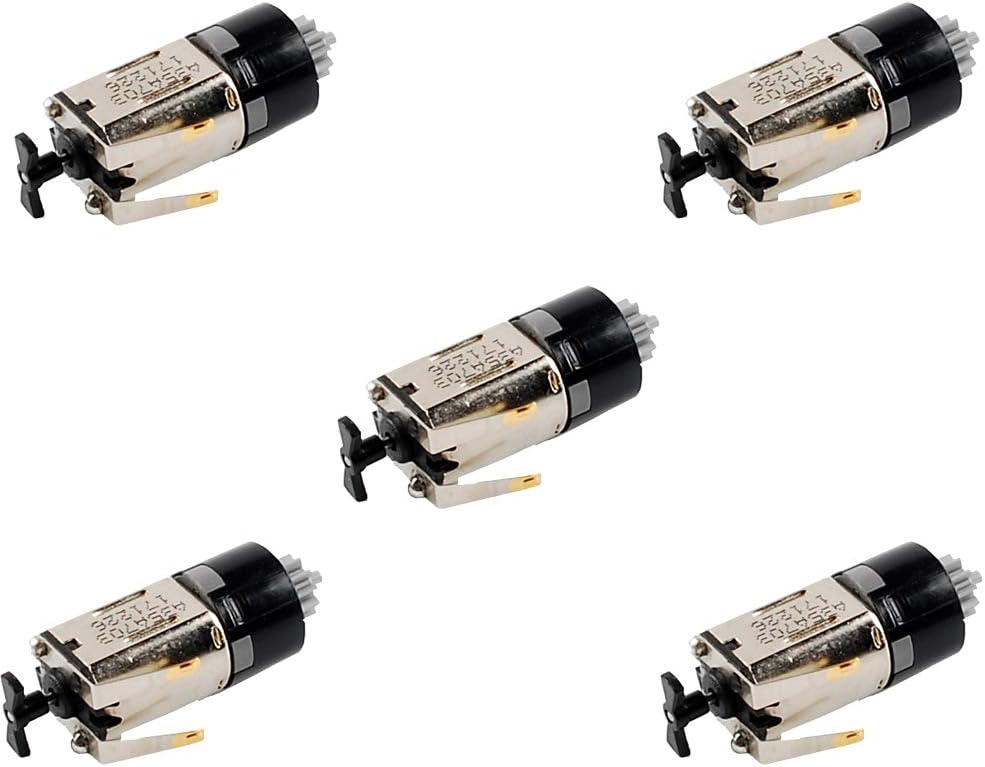
This budget friendly pack offers three mini gear motors ideal for beginners starting their first DIY robot car. The 4.6 rating reflects solid build quality with full metal gears ensuring reliability despite the low cost point.
We may earn a commission when you buy through this link, at no additional cost to you.
Designed for 3 to 6 volts these motors provide slow speed operation which translates to high torque for lifting small components. The metal gearbox prevents stripping common in plastic gear units during extended use.
The main tradeoff is the lack of integrated encoder sensors meaning speed control requires external measurement tools. However for simple line followers or basic mobility projects this setup is sufficient.
Students and hobbyists needing multiple motors for multi-wheeled designs will appreciate the value. It is an excellent entry point for exploring robotics without significant financial investment.
The full metal gearbox ensures consistent performance over time even under load conditions that might strip plastic gears.
Small dimensions allow integration into tight chassis designs where space is limited for wheel motor mounts.
We may earn a commission when you buy through this link, at no additional cost to you.
This high power motor delivers exceptional torque suitable for industrial style robots or large scale automation tasks. With a 4.6 rating it is praised for its ability to handle demanding mechanical loads without overheating or slipping.
We may earn a commission when you buy through this link, at no additional cost to you.
The planetary gear design ensures efficient power transfer while the wide voltage range from 6 to 22 volts allows compatibility with various battery setups. The 8mm shaft provides a secure mounting point for large wheels or gears.
Its size and power requirements mean it is not suited for small tabletop bots. However for moving heavy tables or operating locks it is unmatched in this product category.
Builders focused on strength and stability should choose this model. It brings professional grade torque to hobbyist projects at a competitive price point.
Planetary gearing distributes load evenly across multiple gears reducing wear and increasing torque efficiency.
Operating up to 22 volts allows for faster speeds or higher torque when paired with suitable power supplies.
We may earn a commission when you buy through this link, at no additional cost to you.
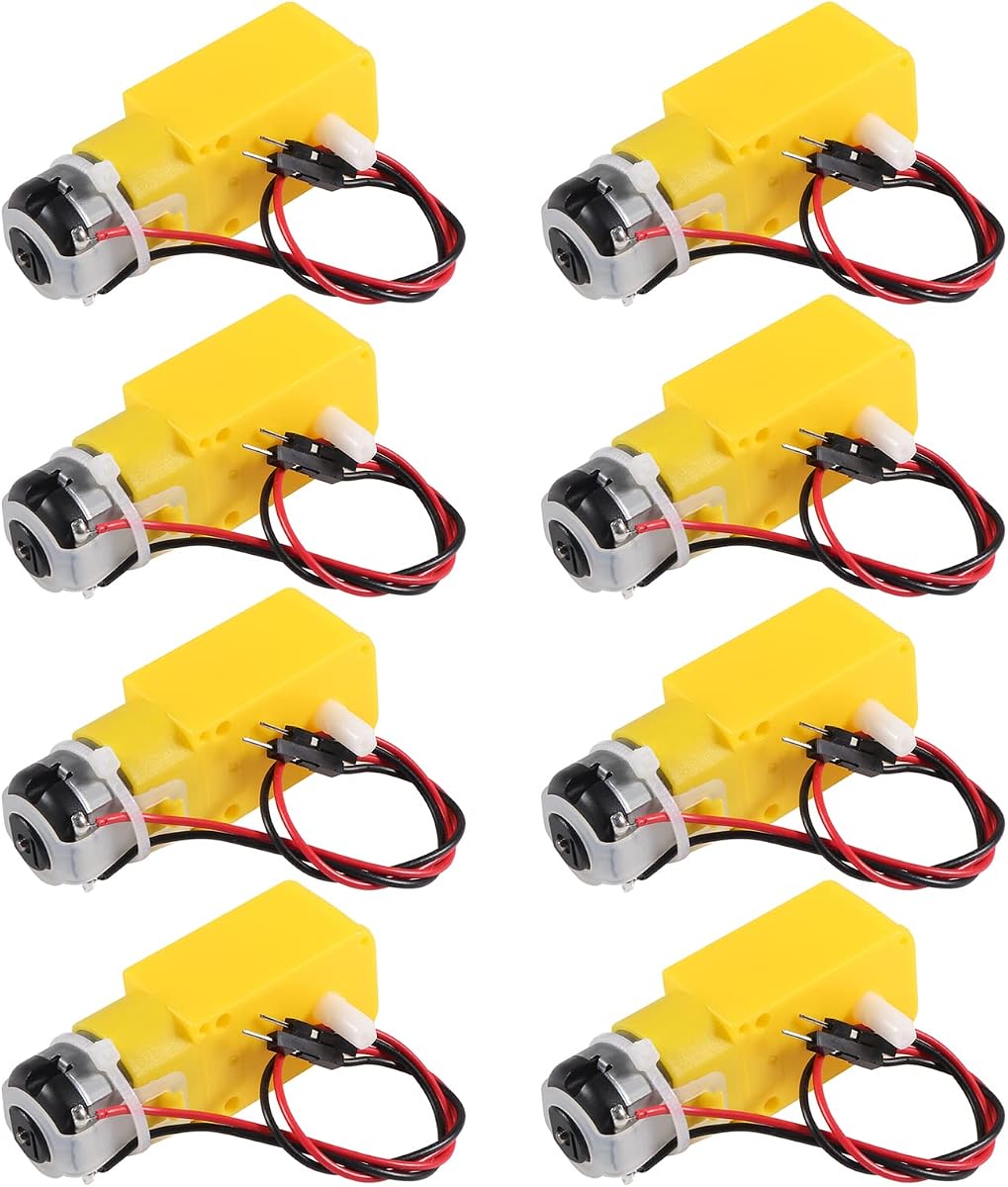
This kit provides eight motors and four wheels making it perfect for large scale educational projects or classroom competitions. The 4.5 rating shows consistent quality across the batch with reliable performance out of the box.
We may earn a commission when you buy through this link, at no additional cost to you.
The 1:48 ratio gives a balanced speed of 200 RPM which is suitable for standard smart car platforms. Wires come with 2.54mm connectors that fit breadboards easily facilitating quick prototyping without soldering.
Wheel quality is basic but functional for testing. The main benefit is the sheer quantity allowing complex builds like 6 or 8 wheel vehicles without buying extra parts separately.
Teams or educators needing multiple sets should consider this option. It simplifies logistics and ensures all units behave similarly during synchronized motion tests.
Plug and play connectors reduce setup time allowing students to focus on coding and logic rather than wiring.
Buying eight units together lowers the cost per motor significantly compared to single purchases.
We may earn a commission when you buy through this link, at no additional cost to you.
This motor offers a complete solution with rubber tires and a bracket allowing immediate installation on chassis. Rated 4.4 stars it is popular for fast smart cars needing reliable traction and structural support.
We may earn a commission when you buy through this link, at no additional cost to you.
Pure copper coils and metal gears ensure heat resistance and longevity. The 500 RPM output provides good forward speed for competition bots where agility is key.
The included bracket simplifies mounting but limits flexibility compared to standalone motors. Fixed 12V input also requires a dedicated power rail.
Hobbyists wanting a plug and play drive system will find this convenient. It minimizes assembly time while delivering robust performance for typical robot car builds.
Integrated mounting bracket reduces the need for custom and speeds up final assembly.
Rubber tires included provide excellent grip on smooth surfaces ensuring stable movement.
We may earn a commission when you buy through this link, at no additional cost to you.
This motor is engineered for precision tasks requiring high torque at low speeds. With a 4.6 rating it stands out for build quality and reliability in demanding applications like balance cars or industrial prototypes.
We may earn a commission when you buy through this link, at no additional cost to you.
The 70:1 ratio delivers 150 RPM max at 12V with strong torque of 27kg.cm. Metal gears and a precise shaft ensure smooth operation and minimal backlash.
While cost is higher than generic options the included bracket and quality assurance justify the investment. It reduces mechanical failures during operation.
Projects needing consistent speed control under load should use this motor. It is a premium choice for builders valuing engineering quality over lowest price.
Metal gears are cut to tight tolerances reducing play in the drivetrain for better control.
Compatible with both 6V and 12V systems allowing flexibility in power supply design.
We may earn a commission when you buy through this link, at no additional cost to you.
This motor achieved a perfect 5.0 rating due to its reliable power and quiet operation. It is designed for RC cars needing strong acceleration without excessive noise or vibration.
We may earn a commission when you buy through this link, at no additional cost to you.
All-metal gears and a pure copper rotor increase conductivity and torque significantly. The D-shaped shaft prevents slipping which is crucial for high speed turns.
The double shaft design adds versatility but may require adapters for standard wheels. Mounting requires custom fabrication unlike kits with brackets.
RC hobbyists upgrading stock motors will find this ideal. It offers professional performance with minimal noise improving overall user experience.
Optimized gear meshing reduces friction noise making it suitable for environments where audio matters.
Double shaft configuration allows flexible mechanical connections for various custom RC builds.
We may earn a commission when you buy through this link, at no additional cost to you.
These miniature motors deliver extreme speeds of 16000 RPM at 3V. They are perfect for small fan or brush bot projects where speed is prioritized over torque. The 4.2 rating reflects good reliability for their specific purpose.
We may earn a commission when you buy through this link, at no additional cost to you.
Operating on low voltage makes them easy to power with AA batteries or small regulators. The compact size allows installation in tight enclosures or wearable tech.
Torque is minimal so they cannot move heavy loads directly. Users often pair them with reduction gears if any force is needed.
For lightweight hobby projects this pack offers excellent value. It provides enough units to experiment freely without cost concerns.
16000 RPM allows spinning propellers or fans for cooling or airflow projects.
Low voltage requirements make these ideal for portable battery operated devices.
We may earn a commission when you buy through this link, at no additional cost to you.
This motor provides a balanced micro solution with a planetary gearbox reducing speed to usable torque levels. The 4.4 rating indicates consistent performance for small scale robotics or IoT devices.
We may earn a commission when you buy through this link, at no additional cost to you.
At 3V it draws minimal current making it safe for battery powered applications. Speed ranges from 110 to 180 RPM depending on input voltage.
The main constraint is the 3V limit. Most 5V systems will overheat the motor quickly.
For 3V or battery operated micro robots this is ideal. It offers torque density that pure micro motors lack without requiring complex gearing.
Current consumption under 60mA at 5V makes it suitable for power constrained embedded systems.
Micro planetary gears reduce size while maintaining higher torque than standard spur gear units.
We may earn a commission when you buy through this link, at no additional cost to you.
This general purpose motor offers a high speed solution for light weight hobby applications. With a 4.4 rating it is widely used for RC models and small drills requiring rapid rotation.
We may earn a commission when you buy through this link, at no additional cost to you.
Built as a compact unit it runs on 6 to 12 volts and reaches 12000 RPM. The small shaft suits precise gears and pulleys in scale models.
Brushed design means eventual wear but this is expected at this price. Low cost makes replacement inexpensive when needed.
For hobbyists needing a spare or backup motor this fits many needs. It is a reliable workhorse for basic motion requirements.
Low price point makes this motor accessible for students experimenting with electronics.
Common 2.3mm shaft size works with many standard hobby gears and pulleys.
We may earn a commission when you buy through this link, at no additional cost to you.
Selecting the right motor involves balancing power, size, and control requirements specific to your robotic application.
Check your power source and controller limits. Motors rated 3V to 6V suit batteries while 12V to 22V options need higher voltage systems. Operating outside range damages units.
Match motor voltage to your system supply to ensure stable operation and longevity.
High ratios like 1:90 produce more torque at lower speeds ideal for lifting. Low ratios allow higher speed for fast vehicles. Consider load weight and desired velocity.
Choose gear ratio based on whether speed or lifting power is your priority.
Shaft diameter determines compatible gears. D-shaped shafts prevent slipping better than round ones. Verify dimensions before mounting components to avoid mechanical failure.
Confirm shaft type matches your wheel or gear mounting needs.
Encoders enable speed and position tracking for precise control. Projects needing navigation require feedback. Simple motion can use unencoded motors to reduce cost.
Use encoders when accurate movement tracking is essential for your software.
Metal gears provide durability and heat resistance. Plastic is cheaper but wears faster. For long term projects metal construction justifies the extra cost.
Prefer metal gears for heavy use or continuous operation.
Integrated brackets simplify assembly. Without them custom mounts are needed. Check if the package includes mounting hardware.
Look for kits with brackets to save fabrication time.
Higher torque motors draw more current. Ensure your battery and ESC handle the load. Excessive draw drains batteries or overheats wires.
Verify your power supply can meet peak current demands.
Multi motor packs offer value for multi-wheeled robots. Buying singles is better for single drive units. Consider total project needs.
Buy multi-packs for symmetrical robot builds to ensure consistency.
Connect wires according to polarity. Reverse polarity changes rotation direction. Use soldering or connectors to secure terminals.
Mount motors securely using brackets. Vibration loosens connections. Ensure shafts align with wheels to reduce stress.
Periodically inspect for dust and debris. Clean vents and gear cases. Replace units showing unusual noise or heat.
Use pulse width modulation via a motor controller. Arduino and similar boards support this. Vary duty cycle to adjust RPM. Avoid direct voltage changes for fine control.
It uses gears arranged around a central sun gear. This design reduces size while increasing torque. It is common in precision robots.
Heat comes from electrical resistance and mechanical friction. Excessive load or continuous operation causes overheating. Allow cooling periods or upgrade to larger motors.
Brushed motors are simpler and cheaper for hobbyists. Brushless motors offer higher efficiency but need complex controllers. Choose based on budget.
Check shaft diameter and shape first. Ensure gear bore matches shaft. Secure with set screws or glue. Test alignment before final assembly.
Yes as long as voltage matches. Lithium batteries provide high current. Add voltage regulators if battery voltage exceeds motor rating.
This guide highlights top options for budget, precision, and heavy-duty robotics. The encoder TT motor leads for control while N20 kits suit beginners.
Prioritize torque for load lifting and encoders for navigation. Match voltage to your power system to avoid damage.
Verify current pricing and availability before buying. Specifications may change so always confirm product details.