
HP 17 Inch FHD Laptop Computer for Business & Students 16GB RAM 1TB SSD
4.6Editor score
16GB RAM ample memory
17.3 inch large display
Ryzen 5 efficient performance
Finding the right laptop for engineering studies requires balancing powerful processing capabilities with everyday portability. Modern engineering software demands robust hardware to run simulations and design tools efficiently without slowing down your workflow during critical projects.
We evaluated ten standout models across various price points to identify the most reliable options available today. Our comparison focuses on CPU power, memory capacity, display quality, and battery endurance to ensure each pick meets rigorous academic demands.
Each selection highlights specific strengths tailored to different engineering disciplines and budget constraints. Prices and availability fluctuate frequently so please verify current details before making your final purchase decision to secure the best value available now.
4.6Editor score

4.6Editor score

4.3Editor score
As an Amazon Associate we earn from qualifying purchases.
The following table provides a side-by-side overview of all ten selected laptops highlighting their core specifications and unique selling points to help you quickly identify the model that aligns best with your specific engineering coursework requirements.




The Lenovo Laptop stands out as a powerhouse for engineering students needing serious processing power. With a 13th Gen i7 processor and 24GB of RAM it handles complex simulations and CAD software smoothly. Its robust build quality ensures it survives the rigors of daily campus life.
We may earn a commission when you buy through this link, at no additional cost to you.
Its standout qualities include exceptional multitasking capabilities and lightning fast storage speeds. The 1TB NVMe SSD means you can boot up instantly and load large project files without waiting. This performance headroom is critical for running virtual machines or engineering tools simultaneously.
The trade-off is a higher price point and slightly heavier chassis compared to basic consumer laptops. However for engineering workloads where performance is non-negotiable this cost is justified by the productivity gains and durability offered over several years of study.
Students in mechanical or electrical engineering should prioritize this model for its reliable horsepower. It is an investment that pays off through smoother workflows and fewer system crashes during critical deadlines. Final recommendation favors this for demanding academic programs.
With 24GB of RAM you can run multiple engineering applications alongside browsers and communication tools without slowdowns. This ensures your system remains responsive even during peak workload hours.
The MIL-STD-810H certification means this laptop has been tested for resistance to shocks and drops. You can carry it confidently between lectures and labs without worry about accidental damage.
We may earn a commission when you buy through this link, at no additional cost to you.
The HP 17 Inch FHD Laptop offers an impressive balance of power and value for budget-conscious engineering students. The 17.3-inch display provides ample screen real estate for spreadsheets and design diagrams. Combined with 16GB of RAM it handles everyday engineering tasks with ease.
We may earn a commission when you buy through this link, at no additional cost to you.
Its key strengths lie in the spacious display and generous memory allocation. The larger screen reduces the need for external monitors in dorm rooms while the RAM allows for smooth switching between heavy applications. This configuration supports a comfortable workflow for most coursework.
The trade-off is reduced portability due to the larger form factor which might be cumbersome for daily commuting. However if you prioritize screen size and internal specs over weight this model delivers significant value for its price range effectively.
This laptop is ideal for students who need a desktop replacement rather than a travel machine. It offers a premium experience without the premium price tag making it a smart choice for focused academic environments. Final recommendation highlights its cost-effective power.
The 17.3-inch Full HD IPS panel offers wide viewing angles and crisp visuals ideal for viewing detailed engineering drawings. This minimizes eye strain during long study sessions.
Pre-installed Windows 11 Pro provides enhanced security and management features suitable for enterprise-level software. This prepares students for professional environments where such OS features are standard.
We may earn a commission when you buy through this link, at no additional cost to you.
The Dell 15.6" Laptop DC15250 brings a premium brand experience with reliable performance for engineering students. The Intel Core i5 processor ensures smooth operation for standard academic work. Its elegant design and comfortable keyboard make daily use enjoyable and efficient.
We may earn a commission when you buy through this link, at no additional cost to you.
Its key strengths include excellent build quality and Dell's exceptional customer service offering onsite support. The ComfortView software reduces blue light to protect your eyes during late-night study sessions. This focus on user experience sets it apart from generic alternatives.
The trade-off is a higher price relative to similar specs available elsewhere which some budget buyers might find steep. However the added warranty support and ergonomic design provide long-term peace of mind and comfort during intensive use periods.
Students who value brand reliability and after-sales support will appreciate this choice. It is a solid investment for those who prefer a seamless experience over raw hardware specifications. Final recommendation favors reliability and support.
One year of onsite service means Dell technicians come to your location to fix hardware issues quickly. This minimizes downtime when you need your laptop for critical assignments.
The ComfortView feature filters harmful blue light emissions to keep your eyes comfortable over extended viewing times. This is vital for students spending hours reviewing documents and code.
We may earn a commission when you buy through this link, at no additional cost to you.
This Windows 11 Laptop offers an accessible entry point for students needing a reliable device for basic coursework. The Intel Core i3 processor handles standard office tasks efficiently. Its backlit keyboard and full HD display add quality touches often missing in this price range.
We may earn a commission when you buy through this link, at no additional cost to you.
Its key strengths include a surprising 12GB of RAM which helps with multitasking. The anti-glare screen reduces eye strain while studying in bright environments. Fast WiFi 6 ensures stable connections for streaming lectures or downloading course materials without lag.
The trade-off is that the i3 processor may struggle with heavy engineering simulations. For general assignments and research it is sufficient but it lacks the raw power for complex CAD work. This makes it best for lighter academic loads.
Students on a tight budget who need a dependable machine for daily tasks should consider this model. It offers great value for fundamental needs without breaking the bank. Final recommendation supports it for introductory students.
The cool backlit keyboard allows you to type clearly even in low light conditions. This is perfect for late night studying in libraries or dorm rooms.
With a TF card slot expandable up to 2TB you can add more space for large project files easily. This flexibility helps adapt the laptop to your growing storage needs.
We may earn a commission when you buy through this link, at no additional cost to you.
The HP 14" Laptop with Intel Processor N150 is designed for efficiency and daily productivity. Its 11-hour battery life ensures you can work all day without hunting for outlets. The included Office 365 subscription adds immediate value for creating reports and presentations.
We may earn a commission when you buy through this link, at no additional cost to you.
Its key strengths are portability and battery longevity which are vital for students moving between classes. The N150 processor offers reliable performance for web browsing and document editing. AI features like Copilot assist in drafting emails and content quickly.
The trade-off is limited storage space which may require cloud solutions or external drives for large projects. While sufficient for coursework it might slow down when handling multiple large files. This is a manageable limitation for most users.
Ideal for students who prioritize portability and battery life over raw processing power. It keeps you connected and productive throughout the day with minimal interruptions. Final recommendation highlights its mobility benefits.
Up to 11 hours of battery life means you can power through back-to-back lectures without needing a charger. This reliability is essential for busy campus schedules.
Copilot AI helps streamline writing tasks and research. This tool speeds up content creation allowing you to focus more on core engineering concepts.
We may earn a commission when you buy through this link, at no additional cost to you.
The HP Stream 14" offers unique value with its massive storage capacity via a docking station. The 16GB of RAM supports smooth multitasking for daily web and app use. It is a compelling option for students needing lots of space for files without high costs.
We may earn a commission when you buy through this link, at no additional cost to you.
Its key strengths include the 1TB of storage included in the bundle which is rare for this price. The HD display is vibrant for media consumption and general study. The included Office 365 ensures you have productivity tools ready immediately.
The trade-off is the lower HD resolution and basic Celeron processor which limits high-end performance. While great for organization and general use it might struggle with complex engineering software. It works best as a secondary device.
Students who prioritize storage and budget over high-speed processing will find this useful. It is excellent for organizing research and media files efficiently. Final recommendation supports it as a value pack.
The included 7-in-1 docking station with 1TB storage gives you massive space for projects. This allows you to keep all your data organized locally.
16GB of DDR4 RAM allows you to run multiple apps smoothly. This is ideal for keeping research tabs and documents open simultaneously without lag.
We may earn a commission when you buy through this link, at no additional cost to you.
The HP 2026 Essential Laptop is a compact device designed for everyday computing needs. Its micro-edge display provides an immersive viewing experience despite the small footprint. This laptop is ideal for students needing a portable machine for basic coursework and communication.
We may earn a commission when you buy through this link, at no additional cost to you.
Its key strengths include a lightweight design and long battery life suitable for all-day class schedules. The modern connectivity options like WiFi 6 ensure fast internet speeds on campus. The anti-glare coating helps maintain comfort during long study sessions.
The trade-off is limited RAM and storage which may require external storage for large files. While sufficient for light tasks it is not suited for heavy engineering simulations. This limits its utility for advanced technical courses.
Students prioritizing portability and simplicity should consider this model for basic academic tasks. It keeps you mobile and connected without unnecessary bulk. Final recommendation favors simplicity and weight.
Weighing just 3.24 lbs with a slim profile it fits easily in any backpack. This makes it perfect for carrying between lectures without fatigue.
The micro-edge bezel design maximizes screen real estate for a 79% screen-to-body ratio. This offers a distraction-free environment for reading and writing.
We may earn a commission when you buy through this link, at no additional cost to you.
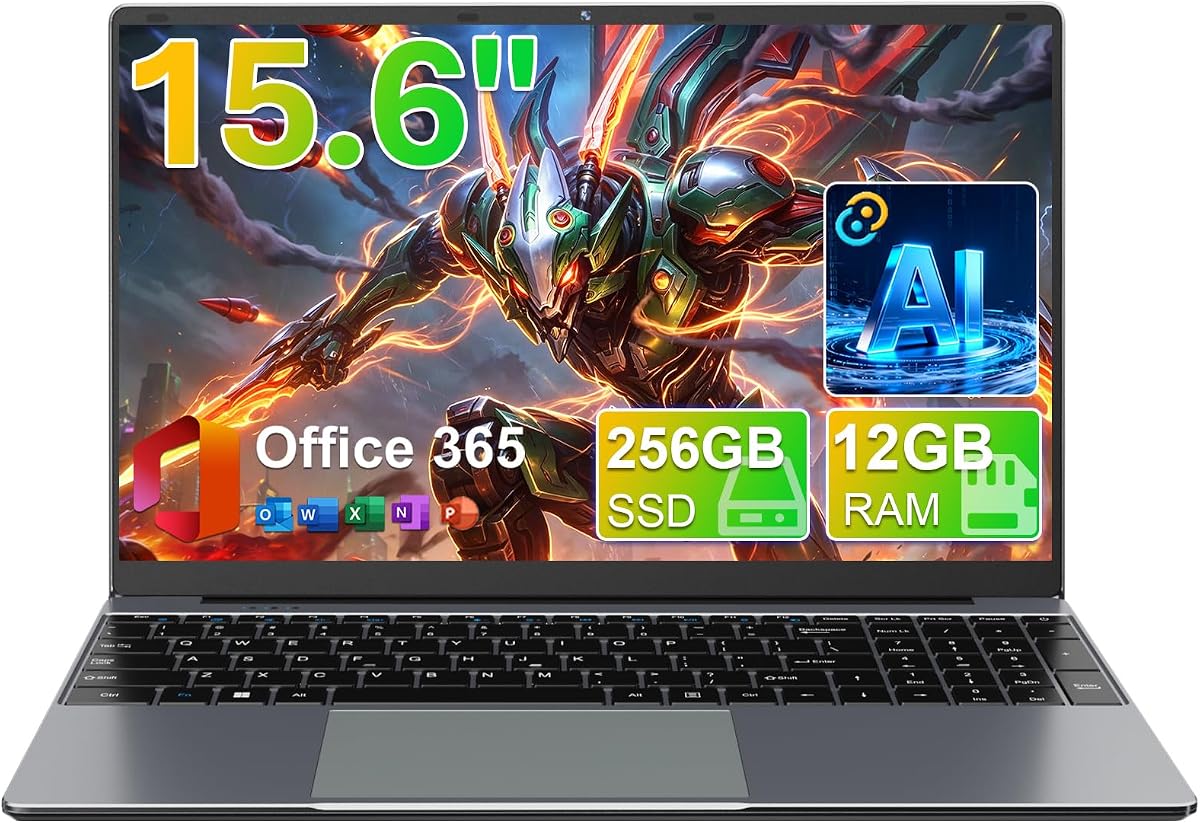
This 15.6" FHD IPS Student Laptop balances functionality and cost for general use. The 180-degree hinge allows for versatile viewing positions useful in group projects. Its AI assistant helps streamline daily tasks saving you valuable time during busy semesters.
We may earn a commission when you buy through this link, at no additional cost to you.
Its key strengths include a sharp FHD display and decent memory that supports smooth browsing. The 256GB SSD ensures quick boot times and file access. This makes it a reliable choice for document editing and research.
The trade-off is an older processor that may slow down under heavy workloads. While good for general tasks it lacks the speed for demanding engineering applications. This should be considered for lighter coursework needs.
Students looking for a simple functional laptop at a reasonable price will find this useful. It handles daily academic duties without complication. Final recommendation highlights its user-friendly design.
The hinge opens flat to 180 degrees giving you flexibility for presentations. This adapts to any viewing position during team collaboration.
The built-in AI assists with writing and reading tasks. This feature simplifies daily tasks and helps manage your schedule efficiently.
We may earn a commission when you buy through this link, at no additional cost to you.
The HP Laptop 2026 Student Business presents a professional look with modern AI features. Its sleek design fits well in both academic and corporate settings. The Copilot AI key provides instant access to assistance helping draft content quickly.
We may earn a commission when you buy through this link, at no additional cost to you.
Its key strengths include efficient battery life and fast wireless connectivity. The lightweight build makes it easy to carry between classes without weight. This ensures you stay productive throughout the day without interruptions.
The trade-off is limited internal storage which might require cloud reliance for large files. While sufficient for documents it is not ideal for heavy engineering software. This suits students focused on lighter tasks and writing.
Students seeking a professional device for general academic work should consider this model. It blends style with functional AI tools effectively. Final recommendation supports its modern features.
The stylish willow green top cover with matte finish creates a modern look. This helps you make a good impression in presentations.
Copilot integration offers AI-powered assistance accessible with a dedicated key. This streamlines content creation and research workflows efficiently.
We may earn a commission when you buy through this link, at no additional cost to you.
The HP 14" Laptop 2026 is a reliable notebook for students and home use. Its N150 processor delivers responsive computing for web browsing and light tasks. The micro-edge bezels offer a comfortable viewing experience for reading and writing.
We may earn a commission when you buy through this link, at no additional cost to you.
Its key strengths include noise reduction for clear video calls and fast connectivity. The versatile ports allow easy connection to monitors and accessories. This ensures you can set up a productive workspace quickly at home or campus.
The trade-off is basic RAM and storage which may limit heavy multitasking. While good for standard tasks it might struggle with complex engineering simulations. This makes it best for basic academic requirements.
Students who need a simple reliable machine for daily study will find this useful. It handles everyday tasks without hassle. Final recommendation supports it for general use.
Wi-Fi 6 and Bluetooth 5.4 provide seamless wireless device pairing. This allows you to connect peripherals effortlessly for enhanced productivity.
Dual-array digital microphones ensure crystal-clear communication. AI Noise Reduction filters background noise for better audio quality.
We may earn a commission when you buy through this link, at no additional cost to you.
Choosing the right laptop for engineering involves balancing processing power with portability and budget. This guide breaks down the essential factors you should consider to make an informed decision that supports your academic success.
Engineering software often requires significant CPU power to run simulations and design tools. Look for modern processors with multiple cores to handle multitasking efficiently. This ensures smooth operation when running heavy applications alongside web browsers.
Prioritize processors with higher core counts for better performance in CAD and simulation tasks.
RAM is critical for running multiple applications simultaneously without slowdowns. For engineering coursework aim for at least 16GB to ensure smooth multitasking. This allows you to keep multiple windows open while working on projects.
Choose laptops with 16GB or more RAM to handle complex workflows and virtual machines.
Fast storage reduces boot times and file access speeds which is vital for productivity. Solid State Drives (SSD) are preferred over older hard drives for their speed and reliability. Ensure you have enough space for large project files and software installations.
Select models with NVMe SSDs for faster performance and ample storage for your files.
A high-quality display reduces eye strain during long study sessions. Look for Full HD resolution with anti-glare coatings to maintain clarity in bright environments. Larger screens can also improve productivity when working on detailed diagrams.
Choose laptops with Full HD or better displays to ensure sharp visuals and comfort.
Long battery life is essential for students moving between classes and study locations. Aim for laptops offering at least 8 hours of usage to last through a full day. This reduces the need to hunt for power outlets on campus.
Prioritize models with high capacity batteries to support uninterrupted study sessions.
Since you will carry your laptop frequently weight and build quality matter. A lightweight chassis with durable construction protects against bumps and drops. Consider dimensions that fit comfortably into your backpack for daily transport.
Choose lightweight laptops with robust builds to withstand daily campus travel.
Modern connectivity ensures you can connect to external monitors and peripherals. Look for USB-C ports with fast data transfer rates for versatile setups. Wi-Fi 6 support provides faster internet speeds for downloading large files.
Ensure your laptop has modern ports to connect accessories and external displays easily.
Balancing cost with performance is key to finding the right device. While higher specs improve productivity consider your specific course requirements before spending. Sometimes mid-range options offer sufficient power without unnecessary costs.
Evaluate your actual needs to avoid overspending on features you may not use.
To maximize your laptop's performance always keep your operating system updated. This ensures security patches and compatibility with new software versions. Regular updates prevent crashes and improve overall system stability.
Protect your device from physical damage by using a padded sleeve in your backpack. Avoid placing heavy items on top of your laptop bag to prevent screen cracks. Careful handling extends the lifespan of your investment significantly.
Maintain your battery health by avoiding constant full discharges. Try to keep your battery charge between 20 and 80 percent during daily use. This practice helps maintain battery capacity over time for longer lasting power.
Essential specs include a multi-core processor like an i7 or Ryzen 5 and at least 16GB of RAM. Fast storage via SSD and a Full HD display are also vital for efficient workflows. These elements ensure smooth operation for tools like AutoCAD and MATLAB.
A dedicated graphics card is helpful for 3D rendering and complex simulations. Integrated graphics may suffice for basic coursework but a discrete GPU improves performance. Consider your major's demands before deciding on graphics capabilities.
16GB of RAM is generally sufficient for most engineering tasks over four years. It handles multitasking well and supports standard design software. However advanced modeling or virtual machines might benefit from 32GB.
Battery life is crucial for students moving between classes without access to outlets. Aim for at least 8 hours of usage to cover a full day. This reduces stress about charging and keeps you productive anywhere.
Windows is generally preferred due to broader software compatibility for engineering tools. Some software runs natively only on Windows systems. macOS and Linux are viable but may require workarounds for specific applications.
Use a padded sleeve and avoid placing heavy items on your bag. Clean the screen with microfiber cloths to prevent scratches. Regular updates and backups also protect your data from loss.
Many modern laptops have soldered components limiting future upgrades. Check if RAM or storage slots are accessible before buying. Upgrading early is often more cost-effective than trying to add later.
Premium brands often offer better build quality and customer support. Features like onsite service can save time during critical academic periods. If budget allows these benefits provide significant peace of mind.
We highlighted the Lenovo Laptop as our top choice for its powerful i7 processor and robust build. The HP 17 Inch FHD Laptop offers excellent value for budget-conscious students needing a large screen. The Dell model provides premium support and durability for long-term academic success.
When choosing your device prioritize processor speed and memory capacity to handle complex coursework. Battery life and portability are also key for students on the go. Balancing these factors ensures you get a machine that supports your studies effectively.
Prices and availability change frequently so check current offers before finalizing your purchase. Review the latest specs to ensure the device meets your current needs. Taking time to compare options will lead to a smarter investment for your academic journey.