
BUFFALO LinkStation 210
3.9Editor score
Includes 2TB hard drive
Simple plug and play setup
Low power idle mode
This guide compares the top low power consumption NAS devices for home and office, evaluating efficiency, features, and performance to help you choose the best
Finding a network attached storage device that balances performance with energy efficiency is crucial for modern home offices. Low power consumption NAS units reduce electricity costs while keeping your data accessible and secure around the clock without overheating your workspace.
We analyzed ten leading models based on processor efficiency, standby modes, and real-world throughput. Our comparison covers entry-level personal clouds to advanced media servers, ensuring you find a unit that fits both your budget and your technical requirements.
Each pick highlights key strengths and limitations to help you make an informed decision. Prices and availability fluctuate frequently, so verify the latest deals before purchasing to ensure you get the best value for your specific storage needs.
3.9Editor score

4.5Editor score

4.2Editor score
The following table provides a side-by-side look at the technical specifications and key features of each model to help you quickly identify the most efficient device for your specific needs.




The UGREEN NAS DXP2800 stands out as a powerful solution for advanced home users who need robust media management. With a rating of 4.5, it balances efficiency with high performance, making it a top contender for creative professionals.
We may earn a commission when you buy through this link, at no additional cost to you.
Its Intel N100 Quad-Core CPU paired with 8GB DDR5 RAM ensures smooth multitasking even when running multiple Docker containers or virtual machines. The 2.5GbE networking and M.2 NVMe slots provide the bandwidth needed for editing large 4K files directly from the NAS.
While the learning curve is steeper than entry-level devices, the AI photo management and surveillance features justify the effort for tech-savvy households. The trade-off is the initial investment in drives, but the centralized data hub benefits are substantial.
If you require a central storage solution that doubles as a media server and security hub, this model is highly recommended. It offers the flexibility to grow with your digital library while maintaining low power draw during idle times.
The hardware transcoding support allows for smooth 4K streaming to various devices without lag or stuttering during playback.
With support for up to 80TB using mixed drive types, you can expand capacity as your collection of photos and videos grows.
We may earn a commission when you buy through this link, at no additional cost to you.
The UGREEN NAS DH2300 is designed for those stepping into personal storage for the first time. It simplifies the process of backing up phones and computers while keeping files private and accessible without a subscription.
We may earn a commission when you buy through this link, at no additional cost to you.
Its entry-level design focuses on essential tasks like photo storage and automatic backups. The minimal power consumption ensures it can run 24/7 without significantly impacting your electricity bill, making it an economical choice for long-term use.
Users should note that it lacks support for virtual machines or complex server applications, but this keeps the interface clean and easy to navigate. The main trade-off is the lack of Wi-Fi, requiring a wired Ethernet connection for stability.
This device is perfect for individuals who want to escape cloud fees and manage their digital memories securely. It provides a straightforward path to owning your data with reliable hardware and effective privacy controls.
Unlike monthly cloud subscriptions, this NAS requires only a one-time purchase, potentially saving you thousands of dollars over ten years.
Built-in AI tags faces and locations automatically, helping you find specific memories quickly without manual sorting.
We may earn a commission when you buy through this link, at no additional cost to you.
For users demanding maximum speed and capacity, the MINISFORUM N5 Air delivers professional-grade performance in a desktop NAS form factor. Its AMD Ryzen processor handles heavy workloads effortlessly, making it ideal for creative studios or data-intensive environments.
We may earn a commission when you buy through this link, at no additional cost to you.
The inclusion of both 10GbE and 5GbE ports ensures that data transfers do not bottleneck your network, allowing for seamless collaboration across multiple users. Support for up to 174TB means you never have to worry about running out of space for large projects.
While it offers powerful features like OCuLink for GPU expansion, the complexity may be overwhelming for average home users. The trade-off involves a more involved setup process compared to simpler plug-and-play units.
If you need a versatile machine that can function as a server, media center, and work station, this is an excellent choice. It combines high-speed connectivity with robust cooling to maintain efficiency even under sustained loads.
Dual network ports support link aggregation, delivering combined speeds of up to 15Gbps for rapid file synchronization.
Features like USB4 and PCIe slots allow for extensive customization and connection to external high-speed devices.
We may earn a commission when you buy through this link, at no additional cost to you.
The Synology DS225+ builds on a legacy of reliable private cloud solutions with enhanced capabilities for media streaming. It is engineered to deliver 4K content smoothly to various devices without the need for complex configuration steps.
We may earn a commission when you buy through this link, at no additional cost to you.
Its Intel CPU supports hardware transcoding which reduces the strain on the processor when serving video files to older devices. This feature ensures that your media library is accessible regardless of the client device capabilities.
While the unit does not come with drives, this allows you to choose high-quality disks that match your performance needs. The three-year warranty adds peace of mind for users relying on this for critical data backups.
For households prioritizing a seamless media experience and robust data protection, this model is a solid investment. It balances power efficiency with high reliability, making it suitable for always-on personal cloud setups.
Multi-layered data protection combines RAID and snapshot technology to prevent data loss from accidental deletion or hardware failure.
Support for up to 30 IP cameras allows you to consolidate media storage and security monitoring in one device.
We may earn a commission when you buy through this link, at no additional cost to you.
The BUFFALO LinkStation 210 is a straightforward option for users who want to plug in their storage and start using it immediately. Since it includes a 2TB hard drive, there is no need for additional purchases or assembly.
We may earn a commission when you buy through this link, at no additional cost to you.
Its simple architecture ensures that power consumption remains low, making it ideal for bedrooms or living rooms where energy efficiency matters. The device focuses on essential tasks like file sharing and basic backup without unnecessary complexity.
However, advanced users might find the single-bay design limiting if they plan to expand storage significantly. The software interface is functional but lacks the advanced automation found in more specialized NAS operating systems.
For basic home use, this device provides a reliable and cost-effective solution for centralizing family files. It is particularly useful for those who prioritize ease of use over high-end performance or expandability.
Access your media and files anytime without monthly fees, giving you complete ownership of your storage hardware.
Works seamlessly with both Windows and macOS systems, ensuring all devices in the house can access shared files easily.
We may earn a commission when you buy through this link, at no additional cost to you.
Designed for creators and small office teams, the UGREEN NAS DXP4800 GT handles complex multitasking efficiently. Its AMD Ryzen processor ensures that multiple users can access files without experiencing performance lags during work hours.
We may earn a commission when you buy through this link, at no additional cost to you.
Dual 10GbE networking allows for ultra-fast data transfers, which is crucial for teams working with large video files or shared databases. The ability to expand RAM up to 64GB further enhances its capability to run virtual machines locally.
While it supports advanced workflows like web hosting and Docker apps, this requires a higher level of technical knowledge to configure properly. The trade-off for this flexibility is a slightly more complex user interface compared to simpler models.
This device is an excellent choice for teams that need a central hub for media processing and data management. It balances power and flexibility, allowing for local privacy while maintaining professional-grade connectivity options.
High-speed SSD expansion and dual network ports allow for smooth 4K and 8K editing directly from the NAS without lag.
Built-in surveillance center supports multiple IP cameras with live view and playback, keeping security footage local.
We may earn a commission when you buy through this link, at no additional cost to you.
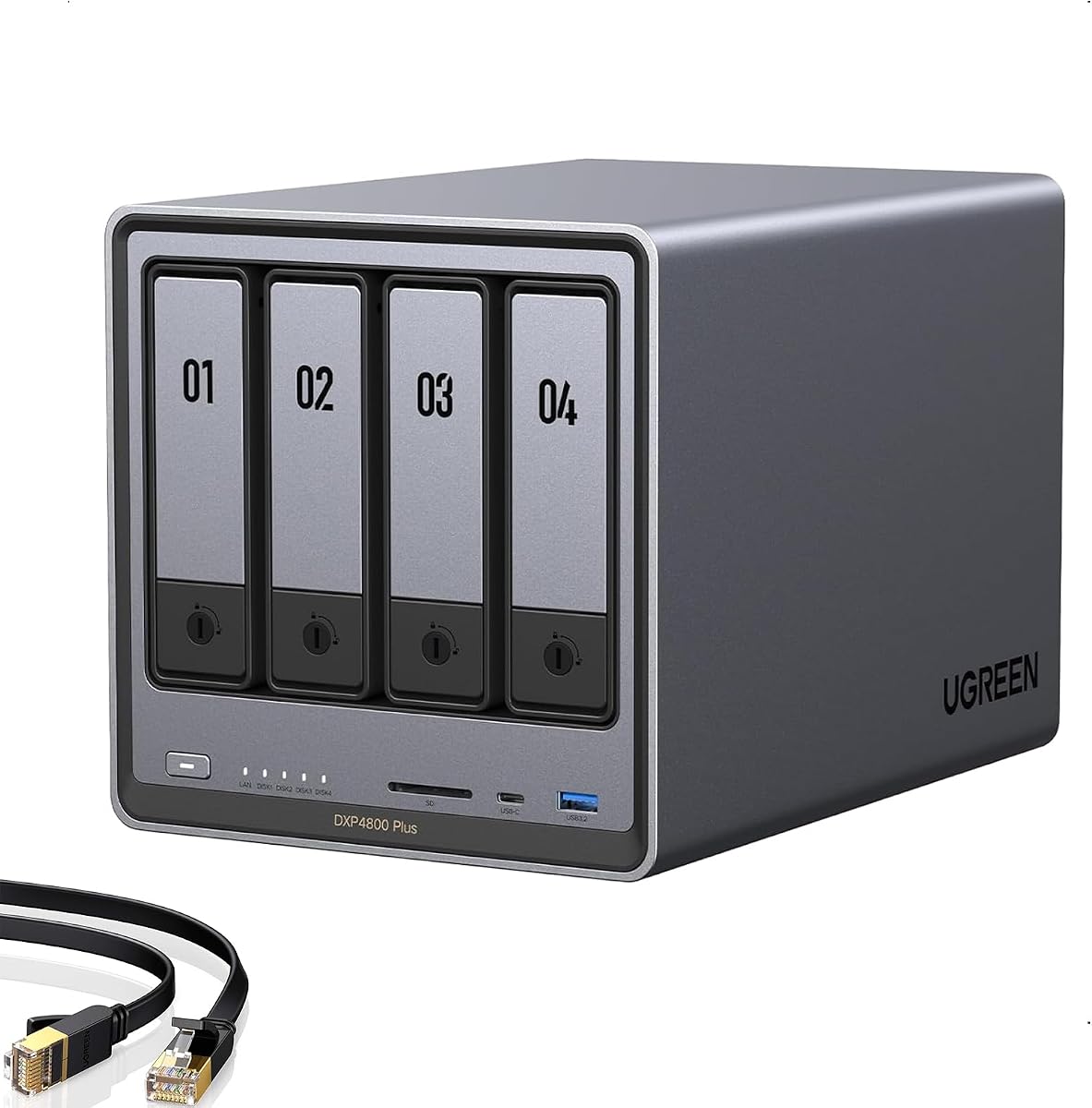
The UGREEN DXP4800 Plus is tailored for families and small teams needing a balance between performance and ease of use. It offers a secure private cloud experience with fast transfers and robust data protection features.
We may earn a commission when you buy through this link, at no additional cost to you.
Its 10GbE network port ensures that backing up large amounts of data happens quickly, minimizing downtime during critical work periods. The app interface is designed to be intuitive, allowing for simple file sharing and management across devices.
Advanced features like AI photo albums help organize large media collections automatically, saving users time and effort. The trade-off is the requirement to purchase hard drives separately, which adds to the initial setup cost.
For users looking for a reliable central storage solution that supports growth, this device is highly capable. It provides a strong combination of speed, security, and user-friendly tools for modern home environments.
Back up one gigabyte of data in less than a second using the high-speed network or USB ports available.
Manage access rights easily to ensure that sensitive files remain private while others are shared with family members.
We may earn a commission when you buy through this link, at no additional cost to you.
The Synology DS223j is an affordable entry point into private cloud storage, offering essential features for safe data ownership. It simplifies the process of keeping files accessible and backed up without monthly subscription costs.
We may earn a commission when you buy through this link, at no additional cost to you.
Its system is designed to be easy to set up and maintain, providing automated backups for both computers and mobile devices. The secure cloud aspect ensures that your data remains private and protected from external breaches.
While it lacks the power for high-end media transcoding, it is more than sufficient for general file storage and photo management. The main limitation is the processing speed during heavy multitasking, but this is acceptable for typical home use.
For households seeking a dependable storage device that keeps data local, this model delivers great value. It combines low energy use with a trusted interface, making it an ideal choice for basic personal server needs.
Set backups to run automatically so you never worry about losing important documents or photos to accidental deletion.
Safely share files with family members while maintaining individual privacy through separate access accounts.
We may earn a commission when you buy through this link, at no additional cost to you.
This compact mini PC serves as a flexible network storage solution for users who value silence and small form factor. It operates quietly and efficiently, making it suitable for placement in living rooms or offices without noise disruption.
We may earn a commission when you buy through this link, at no additional cost to you.
The pre-configured support for various NAS systems allows for customization based on specific technical requirements. With 12GB of RAM and dual network ports, it handles daily file transfers and media streaming tasks with ease.
Storage is limited to M.2 slots which can be costlier per terabyte than traditional hard drives. However, the speed and efficiency make up for this trade-off when dealing with smaller or faster datasets.
For users looking for a home lab or backup server that fits easily on a shelf, this device is highly practical. It delivers robust performance in a tiny package, ensuring your data is safe and accessible.
The vertical airflow system maintains cool temperatures with silent fans, reducing energy use while running continuously.
Pre-configured for popular NAS systems, allowing you to choose the software environment that fits your workflow.
We may earn a commission when you buy through this link, at no additional cost to you.
The Beelink ME Mini PC offers a complete solution for basic server tasks with built-in storage and networking capabilities. Its compact design makes it an easy addition to any desk or entertainment setup without taking up much space.
We may earn a commission when you buy through this link, at no additional cost to you.
With dual LAN ports and Wi-Fi 6, it provides versatile connectivity options for different network setups. The included 1TB SSD offers fast read and write speeds for daily file access and media playback.
While it is less expandable than traditional NAS units, it is perfect for users who do not need massive storage capacity. The trade-off involves limited flexibility for future upgrades, but it covers the basics effectively.
For simple office work, home media, or data center tasks, this mini PC is a convenient and reliable choice. It balances power efficiency with connectivity, making it a strong option for lightweight server needs.
Dual LAN ports allow for network aggregation to ensure stable and fast internet speeds for all connected devices.
Supports 4K video playback directly, turning the unit into a capable media streamer for your television.
We may earn a commission when you buy through this link, at no additional cost to you.
Selecting a low power consumption NAS involves looking beyond just the wattage rating. You must consider how efficiently the device handles tasks like data transfer, media transcoding, and background services to ensure it meets your needs.
The processor is the most significant factor in power consumption. Look for units with modern low-power cores like Intel N-series or AMD embedded CPUs that deliver high performance per watt. These chips ensure that even during peak loads, the device does not draw excessive electricity.
Choose a processor that matches your workload intensity to avoid wasting energy on unnecessary power.
RAM usage directly impacts power draw. Sufficient memory allows the system to handle tasks in memory rather than constantly accessing slower storage. DDR5 or LPDDR5 memory offers better efficiency than older standards.
Ensure the unit has enough RAM for your apps to prevent frequent swapping and high energy use.
The number and type of drives affect power use significantly. Spinning hard drives consume more power during spin-up and operation. SSDs are far more efficient but can be pricier. Many NAS units allow you to power down idle drives.
Select a configuration that balances storage capacity with your power budget requirements.
Network ports play a role in efficiency. Modern Gigabit and 2.5GbE ports manage power differently than older 100Mbps ports. Look for models that support Wake-on-LAN or link aggregation to optimize data flow and idle power.
Verify that your network infrastructure matches the NAS interface to prevent bottlenecks.
Efficient software manages background tasks to minimize resource usage. Look for systems that include scheduling options for backups or indexing. Advanced OS features can throttle CPU speed when the device is idle.
Choose software that supports automated power-saving modes to reduce electricity costs.
Passive cooling or efficient fans reduce noise and power consumption. A well-designed chassis helps dissipate heat without needing high-speed fans. This is crucial for devices running 24/7 in living spaces.
Prioritize models with good thermal management to ensure longevity and low power draw.
Define your usage clearly before buying. If you only need file storage, an entry-level model is sufficient. For media streaming, you need a model with hardware transcoding to avoid CPU overload and higher power spikes.
Match the device capabilities to your actual needs to avoid paying for unused features.
Consider both the purchase price and long-term electricity costs. A slightly more expensive unit with better efficiency can save money over several years. Calculate estimated annual energy costs based on your local rates.
Invest in a model that offers a balance of performance and efficiency for better long-term value.
Proper initial setup is key to ensuring efficiency and reliability. Start by connecting the NAS to your router using a high-quality Ethernet cable to stabilize data transfer speeds and prevent power fluctuations. Install the manufacturer's software on a computer to guide you through creating user accounts and RAID configurations. Ensure you select the correct file system and RAID level to balance redundancy with speed, which optimizes resource usage over time.
Regular maintenance helps maintain low power consumption and protects your data. Set up a schedule to check system logs for any errors that might indicate failing components. Keep the firmware updated to benefit from performance improvements and bug fixes that reduce resource drain. If you use hard drives, monitor their health via SMART tools to catch issues early before they lead to data loss or increased power draw from struggling disks.
To maximize efficiency, utilize power-saving features whenever possible. Most systems allow you to configure shutdown schedules for periods when the NAS is not needed, such as late at night. Disable unused services like cloud syncing or camera recording if you do not need them constantly. Finally, ensure the device is placed in a well-ventilated area to keep temperatures low, which helps fans run less frequently and preserves the lifespan of your hardware.
A typical low power consumption NAS uses between 10 to 20 watts during active use and drops significantly to 5 watts or less in sleep mode. This efficiency helps keep operational costs low even with 24/7 usage, making it cheaper to run than a full desktop computer.
Yes, most NAS units are designed to run 24/7 without overheating thanks to built-in fans and thermal management systems. However, proper placement in a well-ventilated area is essential to ensure heat dissipates effectively and maintains safe operating temperatures.
SSDs generally consume less power than mechanical hard drives because they have no moving parts. In a NAS setup, using SSDs for cache or system storage can improve performance and reduce overall energy consumption during read-write operations.
Yes, a NAS is worth buying if you need secure, centralized storage accessible from multiple devices. It eliminates monthly cloud fees and gives you full control over your data while providing automated backups to protect against accidental loss.
You can reduce power by enabling power-saving features in the settings, scheduling shutdowns during idle times, and disconnecting unused drives. Additionally, keeping the firmware updated ensures you have the latest energy management patches from the manufacturer.
While some units support Wi-Fi, a dedicated Ethernet cable is highly recommended for stability and lower latency. Wired connections also tend to be more power-efficient for consistent data transfers compared to wireless signals.
We have reviewed the top ten low power consumption NAS models ranging from entry-level setups to high-performance media servers. Each device offers unique benefits for different users, whether you prioritize cost efficiency, storage capacity, or advanced features.
When choosing, prioritize models with modern processors and efficient memory management to ensure your device runs economically. Consider your specific storage needs and whether you require advanced capabilities like virtual machines or simple file sharing.
Prices and availability change often, so verify current deals before making a purchase. By selecting a device that matches your technical requirements and power budget, you can enjoy a reliable and efficient home cloud solution for years.